Did you know that while dental implants boast a success rate of over 95 percent in their first year, their lifelong survival depends almost entirely on your routine at home? It’s a common concern for many patients who worry that one wrong move with a toothbrush might jeopardize their new smile. Understanding how to care for dental implants doesn’t have to be a source of stress or confusion. Whether you’re worried about potential infections or simply want to protect your investment, having a clear plan is the best way to feel confident in your oral health.
We understand that you want your results to last a lifetime without the fear of unexpected repairs. In this comprehensive 2026 guide, you’ll discover the essential daily habits and specialized tools that keep your gums healthy and your restorations secure. We’ll also explore how advanced VideaHealth AI diagnostics and flexible payment options like CareCredit or Sunbit make professional maintenance more accessible than ever. From the first 72 hours of recovery to long-term monitoring, this article provides the roadmap you need for a permanent, radiant smile.
Key Takeaways
- Master the critical first 48 hours of recovery by using cold compresses and prioritizing rest to ensure successful osseointegration.
- Learn exactly how to care for dental implants daily by selecting the right soft-bristle brushes and flossing techniques designed specifically for restorations.
- Discover how VideaHealth AI diagnostics can detect early bone density changes that the human eye might miss during routine professional cleanings.
- Identify the specific dietary habits and lifestyle choices, such as avoiding sticky foods and tobacco, that protect your implant’s long-term stability.
- Simplify your dental health journey with personalized care plans and transparent pricing options designed for every member of the Lowell community.
Immediate Post-Surgical Care: The First 48 Hours
The surgery is complete and your journey toward a restored smile has officially begun. This initial window is the most critical time for your body to start the healing process. While dental implants have a success rate higher than 95 percent, that success depends heavily on how you treat the surgical site during these first two days. Understanding what dental implants are and how they interact with your jawbone helps explain why “rest and digest” is a medical necessity rather than just a suggestion.
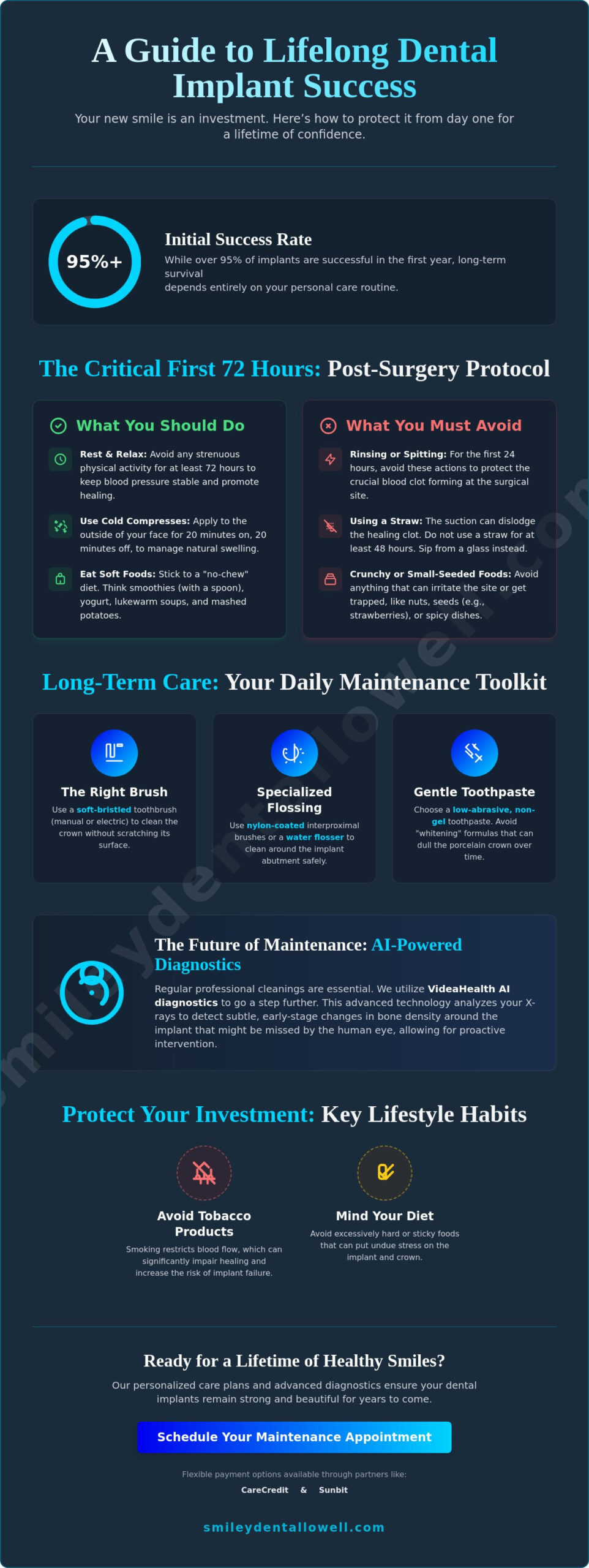
When patients ask our team how to care for dental implants immediately after their appointment, our first answer is always patience. Your body needs to initiate osseointegration, which is the biological process where the implant post and your bone become a single, sturdy unit. To support this, you should avoid any strenuous physical activity for at least 72 hours. A resting heart rate keeps your blood pressure stable, which prevents unnecessary throbbing or bleeding at the incision site. During the first 24 hours, it is also vital to avoid rinsing your mouth or spitting, as these actions can disturb the healing tissue.
Managing Swelling and Discomfort Safely
Swelling is a natural part of the healing process and typically peaks between 48 and 72 hours after your procedure. You can keep this manageable by using a cold compress on the outside of your face. Use a cycle of 20 minutes on followed by 20 minutes off to constrict blood vessels and soothe the area. For discomfort, standard over-the-counter pain relief is usually very effective. We’ll provide a personalized plan based on your medical history to ensure you stay comfortable. If you experience a sudden fever or sharp pain that doesn’t improve with medication, contact your Lowell dentist right away so we can provide assistance.
The “Soft Food” Phase: What to Eat
Your diet is a major factor in how to care for dental implants during the first week. We recommend a “no-chew” diet to protect the implant from any direct pressure. Nutritious, easy-to-eat options include:
- Protein shakes and smoothies (enjoyed with a spoon).
- Greek yogurt, cottage cheese, or lukewarm soups.
- Mashed potatoes, avocados, or applesauce.
You should strictly avoid foods with small seeds, like strawberries, which can get trapped in the surgical site. Crunchy snacks and spicy dishes can also cause irritation. Most importantly, do not use a straw for at least 48 hours. The suction created by a straw can dislodge the blood clot that is essential for proper healing. Instead, sip your liquids directly from a glass or use a spoon to keep the area undisturbed and safe.
Daily Maintenance: Brushing and Flossing Your Implants
Once the initial healing phase is over, your focus shifts to long-term preservation. While your porcelain crown cannot get a cavity, the gums and bone supporting the implant remain susceptible to infection. Learning how to care for dental implants through a dedicated daily routine is the most effective way to prevent peri-implantitis, a condition similar to gum disease that can lead to implant failure. Daily maintenance for your implants requires a slightly different approach than natural teeth because the attachment between the implant and the gum is more delicate.
The Best Tools for Implant Hygiene
Selecting the right equipment is your first step toward success. We always recommend a soft-bristled toothbrush, whether manual or electric, to clean the restoration without scratching the surface. If you use an interproximal brush to clean between teeth, ensure it is nylon-coated. Metal wires can scratch the titanium post, creating tiny grooves where bacteria love to hide. This is a common mistake that can lead to plaque buildup in areas you can’t see.
Toothpaste choice also matters. Many “whitening” brands contain abrasive particles that can dull the shine of your porcelain over time. Opt for a low-abrasive, non-gel toothpaste to keep the finish looking brand new. For those with dental implant restorations like bridges or All-on-X arches, a water flosser is a fantastic investment. It uses a gentle stream of water to flush out debris from hard-to-reach areas that traditional tools might miss, making your routine both easier and more effective.
Step-by-Step Flossing Technique
Standard flossing often falls short because it doesn’t adequately wrap around the cylindrical abutment. To get a deeper clean, many patients find success with the “shoe-shine” method. You take a piece of specialized, spongy implant floss, thread it through the gap, and gently move it back and forth in a buffing motion. This ensures every millimeter of the abutment is clear of plaque. It’s a gentle way to protect the seal between your gums and the implant.
For single implants, you should still use a “C-shape” motion, but be extra gentle near the gumline. If you have a bridge, use a floss threader to get the material underneath the prosthetic where food particles often hide. While cleaning twice a day is ideal, the evening session is the most critical. Removing the day’s buildup before you sleep gives your gums a chance to rest and recover without bacterial interference. This simple commitment ensures your how to care for dental implants strategy keeps your smile healthy for decades.
Professional Maintenance and AI Diagnostics in Lowell
Your daily routine at home is the foundation of long-term success, but professional checkups are the safety net that protects your investment. Even with the best brushing habits, certain areas around the abutment are difficult to reach. When you visit us in Lowell, our team acts as your partner in health, using clinical expertise to ensure your restoration remains as healthy as the day it was placed. Learning how to care for dental implants involves recognizing that professional oversight is just as vital as your morning toothbrushing. This FDA guide on dental implants emphasizes that regular clinical monitoring is essential to identify potential complications before they become painful or require expensive repairs.
How AI Enhances Your Implant Success
We believe our patients deserve the most advanced technology available, which is why we’ve integrated VideaHealth AI Diagnostics into our practice. This system acts like a second pair of expert eyes, analyzing your digital X-rays with incredible precision. It can identify microscopic changes in bone density that might be invisible during a standard review. This technology is particularly helpful for detecting “silent” peri-implantitis, an infection that often lacks obvious symptoms like pain or swelling in its early stages. By catching these issues early, we can provide gentle, proactive treatments that save your implant and your smile. Our use of AI-powered X-rays provides a higher standard of care in Lowell, giving you total confidence that your health is being monitored with the best tools 2026 has to offer.
What Happens During an Implant Cleaning?
A professional cleaning for an implant is a specialized process that differs from a standard cleaning for natural teeth. We use specific tools made of high-grade plastic or titanium to gently remove plaque and tartar. These materials are chosen specifically because they won’t scratch the porcelain crown or the metal post. Scratches are dangerous because they create tiny hiding spots for bacteria to grow. We also take the time to check your occlusion, which is how your teeth meet when you bite. If your bite is slightly off, it can create mechanical stress on the implant that leads to bone loss over time.
If you’re still in the planning stages of your journey, you can read our guide on Missing Teeth Solutions in Lowell, MA to see how we customize every restoration. We recommend a professional visit every six months as the absolute limit. This frequency allows us to monitor the delicate “seal” between your gum tissue and the titanium post. Keeping this seal tight and healthy is one of the most important aspects of how to care for dental implants for a lifetime of comfort and function.
Lifestyle Habits for Lifelong Implant Success
Your daily brushing and flossing routine provides the foundation for a healthy smile, but your lifestyle choices act as the scaffolding that keeps that foundation strong. While your restoration is designed to be incredibly durable, it still relies on the living tissue of your jaw and gums for support. Understanding how to care for dental implants means looking at the bigger picture of your health. Systemic conditions, such as managed diabetes, can influence how your body maintains the bone around the implant post. By prioritizing your overall wellness, you’re directly investing in the longevity of your dental work.
Smoking and Implants: A High-Risk Combo
Smoking is one of the most significant lifestyle factors that can jeopardize your results. Nicotine acts as a vasoconstrictor, which means it shrinks the blood vessels in your jawbone and gum tissue. This reduced blood flow makes it much harder for your body to fight off minor bacteria or heal from everyday wear and tear. For smokers, the risk of developing peri-implantitis, a serious infection around the post, is significantly higher than for non-smokers. If you currently use tobacco, we recommend exploring cessation programs or at least significantly reducing use. Protecting the blood supply to your jaw is one of the most proactive steps you can take when learning how to care for dental implants effectively.
Protecting Implants from Mechanical Stress
One of the most important biological differences between a natural tooth and an implant is the lack of a periodontal ligament. Natural teeth have this tiny “cushion” that acts as a shock absorber. Because an implant is fused directly to the bone, it doesn’t have that same flexibility. This makes the porcelain crown more vulnerable to mechanical stress from teeth grinding or biting down on hard objects. If you have a habit of clenching your teeth at night, also known as bruxism, a custom-fitted night guard is a non-negotiable tool to prevent fractures or bone loss. To ensure your bite is aligned and your implants are protected, we invite you to schedule a comprehensive dental exam with our friendly team.
Your diet also plays a role in preventing mechanical failure. We often tell our patients: “If you wouldn’t bite a rock, don’t bite it with your implant.” This means avoiding habits like chewing on ice, crunching on unpopped popcorn kernels, or using your teeth as tools to open packages. Sticky candies can also put unnecessary lateral pressure on the restoration. By treating your implants with the same care you’d give a natural tooth, you ensure they remain a functional and beautiful part of your smile for decades to come.
The Smiley Dental Lowell Advantage: Accessible Implant Care
Choosing the right dental home is just as vital as mastering the daily habits of how to care for dental implants. At Smiley Dental Lowell, we’ve built our practice around the idea that professional care should be a supportive, neighborly experience rather than a source of anxiety. We understand that a lifelong smile is an investment in your confidence and your health. That’s why we offer a “verbal handshake” to every patient; a promise of radical transparency, clinical excellence, and a welcoming atmosphere that feels like home. Whether you’re a young professional or a senior, our personalized care plans are designed to meet your specific needs at every stage of your journey.
Our commitment to the Lowell community goes beyond the dental chair. We prioritize your physical comfort and your financial peace of mind with equal dedication. We know that many patients worry about the cost of repairs or the complexity of maintenance. By providing clear, jargon-free explanations of every procedure, we empower you to make informed decisions. If you ever have an urgent concern about your restoration, our team is ready to provide the emergency assistance you need to keep your smile secure and pain-free.
Stress-Free Financial Planning for Maintenance
Navigating the logistics of dental coverage shouldn’t be a headache. Our administrative team acts as your advocate, helping you understand exactly how your benefits apply to your restorative care. If you’ve been searching for a Dentist Accepts My Insurance Lowell, you’ll find that we work hard to maximize your coverage for routine checkups and cleanings. We also offer flexible payment options through partners like CareCredit and Sunbit. These tools allow you to manage the cost of your long-term care through manageable monthly plans, ensuring that professional maintenance is always within reach.
Your Local Lowell Partner for Oral Health
We believe that high-tech dentistry should still have a personal touch. By integrating VideaHealth AI diagnostics into our routine exams, we provide a level of accuracy that helps keep your care affordable. Catching a minor issue early is much easier on your schedule and your wallet than treating a major complication later. This proactive approach is a core part of how to care for dental implants for the long term. We offer convenient scheduling to accommodate busy local families, making it simple to stay consistent with the professional cleanings that protect your dental work. Your journey to a permanent, beautiful smile doesn’t have to be a solo effort. Schedule your implant consultation or cleaning at Smiley Dental Lowell today! and experience the difference of patient-centric, community-focused care.
Secure Your Smile for Decades to Come
Maintaining a healthy, functional smile is a journey that combines your daily efforts at home with the support of a trusted professional team. By mastering the right brushing and flossing techniques and making mindful lifestyle choices, you’ve already laid the groundwork for success. Remember that understanding how to care for dental implants isn’t just about the mechanics; it’s about staying proactive with your health. Regular checkups allow for the early detection of issues that are often invisible to the naked eye, ensuring your investment remains protected.
At Smiley Dental Lowell, we’ve been providing multi-generational family dental care since 2003. We make professional maintenance stress-free by accepting most major insurance plans and utilizing VideaHealth AI diagnostics for unmatched precision. Our goal is to ensure your dental work remains as comfortable and beautiful as the day it was placed. We’re here to be your partner in health, offering a welcoming environment where your peace of mind is our top priority. Book your AI-powered dental implant exam at Smiley Dental Lowell today! and take the next step toward a radiant, confident smile that lasts a lifetime.
Frequently Asked Questions
Can dental implants get cavities like natural teeth?
No, dental implants cannot develop cavities because they are made of materials like titanium and porcelain that don’t decay. However, the surrounding gum tissue and bone are still vulnerable to disease. If plaque builds up, it can cause inflammation that threatens the stability of the post. This is why learning how to care for dental implants through consistent cleaning is just as important as caring for your natural teeth.
How long do dental implants typically last with good care?
With excellent oral hygiene and regular professional visits, dental implants can last 25 years or even a lifetime. The American Academy of Implant Dentistry reports that success rates remain consistently above 90 percent at the 10-year mark. While the porcelain crown may eventually need replacement due to normal wear, the titanium post is designed to remain a permanent part of your jawbone.
Is a water flosser better than traditional floss for implants?
A water flosser is often more effective than traditional floss for complex restorations like bridges or All-on-X arches. It uses a pressurized stream to reach under the prosthetic where traditional string might struggle. For single implants, specialized spongy floss is often preferred to clean the circumference of the abutment. We can help you decide which tool fits your specific restoration during your next visit.
What are the signs of a failing dental implant?
The most common signs of a failing implant include persistent pain, swelling, or a feeling of instability. You should also watch for bleeding gums or a receding gum line around the restoration. If you notice any of these symptoms, contact us immediately. Early intervention is the key to saving the implant and preventing further bone loss in the jaw.
Does dental insurance cover the cost of implant maintenance?
Most major dental insurance plans cover routine maintenance, such as professional cleanings and comprehensive exams, just as they do for natural teeth. While coverage for the initial placement varies, the ongoing care required to keep your smile healthy is usually included in standard preventative benefits. Our administrative team can help you navigate your specific policy to maximize your benefits and minimize out-of-pocket costs.
Is it normal for a dental implant to feel slightly loose?
No, it is never normal for a dental implant to feel loose. An implant should feel just as stable and secure as a healthy natural tooth. If you notice any movement, it could indicate that the porcelain crown has come loose or that the implant itself hasn’t fully fused with the bone. This is a situation that requires prompt professional attention to prevent damage.
How soon can I brush my teeth after implant surgery?
You can typically begin gentle brushing 24 hours after your surgery. Use a soft-bristled toothbrush and avoid the surgical site itself for the first day to protect the healing tissue. After the initial 24-hour window, you can carefully brush the area to keep it clean and free of debris. Always follow the specific post-operative instructions provided by our team to ensure a smooth recovery.
What is peri-implantitis and how is it treated?
Peri-implantitis is a site-specific infectious disease that causes inflammation in the gums and bone loss around a dental implant. It’s often treated through deep professional cleanings, antimicrobial rinses, or local antibiotics to eliminate bacteria. In more advanced cases, minor surgical procedures may be needed to repair the bone. This condition is the primary reason why knowing how to care for dental implants through daily hygiene is so essential.