Your new dental crown is designed to last for decades, but its long-term success is actually decided in the first twenty-four hours after you leave the dentist’s chair. You’ve invested time and energy into restoring your smile, so it’s completely natural to feel a bit nervous about sitting down for your first meal. Many patients worry about a crown shifting or cracking before the cement has fully cured, especially while their mouth still feels a little numb from the anesthesia. We understand that you want to protect your investment without spending the next few days feeling hungry or uncomfortable.
This 2026 recovery guide simplifies your post-op experience by showing you exactly what to eat after a crown placement to ensure a smooth, stress-free healing process. You’ll discover a clear timeline for when it’s safe to chew, a comprehensive list of delicious soft foods that won’t irritate your gums, and professional tips for protecting your new porcelain restoration. We’ll also clarify the differences in care between temporary and permanent crowns so you can avoid any unexpected surprises. By the time you finish reading, you’ll have the confidence to enjoy your meals while knowing your new smile is setting perfectly into place.
Key Takeaways
- Protect your new smile by waiting at least 30 to 60 minutes before your first meal to allow the dental cement to reach its initial strength.
- Master your recovery menu with a clear list of what to eat after a crown placement, focusing on soft textures that keep you full without straining your teeth.
- Keep your restoration secure by identifying the specific sticky and crunchy foods that pose the biggest threat to your crown during the first 24 hours.
- Distinguish between expected temporary sensitivity and bite alignment issues that may need a simple at-home test or a professional checkup.
- Learn how advanced AI diagnostics and proper hygiene habits work together to maximize the lifespan of your porcelain crown.
Immediate Post-Procedure: When Can You Start Eating?
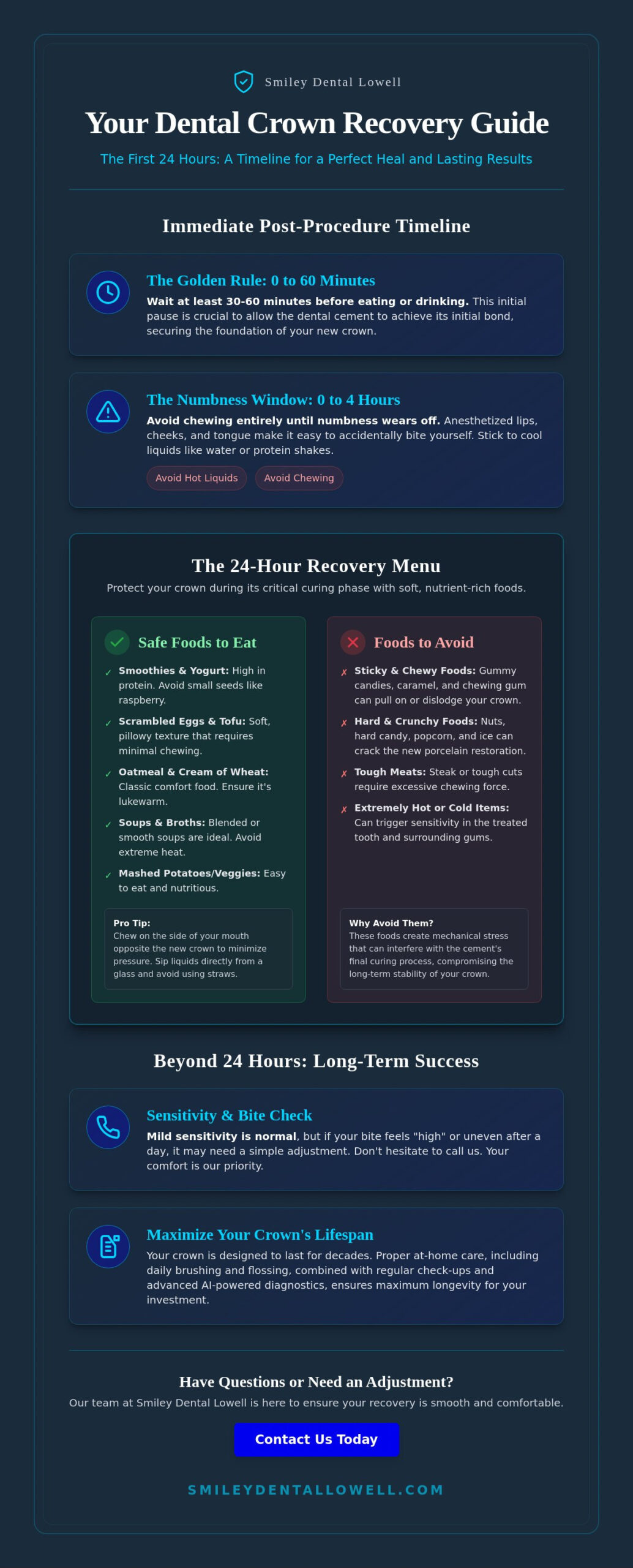
You’ve just finished your appointment, and your smile looks better than ever. While you might be ready to celebrate with a meal, the first hour is purely about patience. The “Golden Rule” of crown recovery is to wait at least 30 to 60 minutes before putting any pressure on your new restoration. Even though modern 2026 dental adhesives are engineered to bond quickly, they need this short window to reach their initial set. This brief pause ensures the foundation of your dental work remains stable and secure.
Deciding what to eat after a crown placement depends heavily on how you feel and the type of restoration you received. If you have a permanent crown (dental restoration), the bond is incredibly strong; however, the surrounding gum tissue is often still recovering. Temporary crowns require even more caution, as the cement is designed to be removed later. Your biggest hurdle in these first few hours isn’t actually the food itself. It’s the lingering numbness from the local anesthesia.
The Numbness Window (0-4 Hours)
It’s best to avoid chewing entirely until the feeling returns to your lips, cheeks, and tongue. When you’re numb, you lose the ability to feel pain or pressure, which makes it very easy to accidentally bite yourself. This can lead to painful sores or swelling the next day. If you’re feeling hungry, stick to cool or room-temperature liquids like water or a protein shake. Avoid hot coffee or tea, as you won’t be able to tell if the liquid is burning your mouth. You’ll know it’s safe to transition to food once you can feel a light pinch on your lip or move your tongue without that heavy sensation.
The Cement Curing Phase (First 24 Hours)
The first day is the most critical time for the longevity of your restoration. During these 24 hours, the chemical bond between your tooth and the porcelain is maturing. In our Lowell practice, we use high-strength bonding agents that provide maximum durability, but they still require a soft-food bridge to ensure they aren’t disturbed. You should feel the crown sitting flush with your other teeth. If it feels high or if your bite seems uneven after the first few hours, it’s a sign we may need to make a quick adjustment. Most patients find that by following these simple timing rules, their new crown feels like a natural part of their smile by the next morning.
The 24-Hour Recovery Menu: Best Foods for Your New Crown
After you’ve navigated the initial hour of waiting, you’ll likely feel ready for a snack. Finding the right balance of what to eat after a crown placement doesn’t mean you have to skip meals or feel hungry. The goal during the first full day is to minimize mechanical pressure on the crown while keeping your energy up. We recommend choosing foods that require very little chewing, or practicing “side-chewing” on the opposite side of your mouth to give the restoration a break. Temperature is also a key factor during this window. Your tooth may be slightly sensitive to thermal changes right now, so lukewarm meals are much gentler than anything steaming hot or ice cold.
Staying hydrated is equally important for your recovery, but try to avoid using a straw for the first 24 hours. The suction can sometimes create pressure around the treatment site that feels uncomfortable. Instead, sip directly from a glass. If you ever feel unsure about your recovery steps, our team at Smiley Dental Lowell is always here to provide guidance and ensure your transition is as smooth as possible.
Breakfast and Snack Ideas
Start your morning with nutrient-dense options that slide down easily. High-protein choices help your body recover, but you must be careful with specific textures. Consider these gentle options:
- Greek yogurt or protein smoothies: These are excellent for staying full. Just ensure you aren’t using small seeds like raspberries or strawberries, as they can get stuck under the gumline.
- Scrambled eggs or silken tofu: These provide a soft, pillowy texture that requires almost no effort to eat.
- Oatmeal or cream of wheat: This is a classic comfort food. Just let it cool down to a comfortable temperature before taking your first bite.
Lunch and Dinner Suggestions
For your main meals, focus on savory, blended textures that don’t require heavy biting. According to the Cleveland Clinic guide on dental crowns, choosing the right foods is essential for preventing the crown from becoming dislodged before the cement is fully set. Try these satisfying meals:
- Mashed potatoes or cauliflower: These are filling and can be seasoned with mild herbs for flavor without any added crunch.
- Blended soups: Butternut squash, tomato, or split pea soups are perfect. Ensure they are smooth and served lukewarm rather than boiling.
- Soft noodles: Think well-cooked pasta in a light butter or cream sauce. Avoid “al dente” textures; overcook the noodles slightly so they are very soft and easy to mash with your tongue.
The Danger Zone: Foods to Avoid After a Crown Placement
While you’re learning what to eat after a crown placement, it’s equally vital to identify the “deal breakers” that could send you back to the clinic for an emergency repair. The first 48 hours are when your crown is most vulnerable to displacement or fracture. During this time, the cement is still reaching its peak bond strength. Even a single bite of the wrong texture can create enough force to shift the restoration. We want your recovery to be as smooth as possible, so keeping these specific items off your plate for a few days is a small sacrifice for a long-lasting smile.
Sticky and chewy foods like caramels, taffy, and thick fruit leathers are the primary culprits for early crown failure. These foods create a powerful suction effect. When you open your jaw to chew, the sticky substance pulls on the crown with a vertical force that the curing cement isn’t yet ready to resist. This “pulling” motion is the most common reason crowns come loose shortly after placement. Similarly, hard bread crusts, nuts, and ice cubes present a different danger. These require crushing forces that can cause micro fractures in new porcelain. While porcelain is incredibly durable once stabilized, it’s more brittle during the initial settling period.
Tough meats and popcorn also belong in the danger zone. Avoid steak or beef jerky, as these require a heavy grinding motion that puts lateral stress on the crown margins. Popcorn is particularly risky because of the thin, sharp hulls. These can easily slide under your newly treated gum line, causing irritation or even infection while the tissue is still healing. By avoiding these hazards, you’re giving your tooth the best possible environment to bond securely.
Mechanical Risks: Sticky and Hard Foods
Chewing gum is strictly off limits for at least 24 to 48 hours. It combines the dangers of suction and constant grinding, which can compromise the seal of your new restoration. If you’re craving vegetables, don’t eat them raw. Instead, steam them until they’re fork tender to eliminate the “crunch” factor. This extra care protects the crown while it stabilizes against the natural forces of your bite.
Chemical and Temperature Irritants
Your gums and the tooth underneath the crown may feel quite tender. Highly acidic choices like citrus fruits or sodas can sting sensitive tissue and increase discomfort. According to this post-procedure recovery guide, managing your expectations regarding sensitivity is a key part of the healing process. Extremely hot coffee or soup can also trigger sharp, temporary pain if the area is still inflamed. It’s also wise to skip alcohol for the first day or two, as it can interfere with your body’s natural healing rhythm and may slow down the recovery of your gum tissue.
Managing Sensitivity and Bite Adjustments at Home
Once you have mastered the basics of what to eat after a crown placement, you might notice some new sensations as the anesthesia completely wears off. It’s normal to feel a minor “zing” when drinking cool water or a bit of tenderness along the gumline. This is usually just your tooth and the surrounding tissue adjusting to the new restoration. Most of these feelings are temporary and fade within a few days as your body adapts to the porcelain material and the bonding process. We want you to feel completely at ease during this transition, so understanding what is normal can help alleviate any lingering anxiety.
While your mouth is healing, you should continue to chew on the opposite side of your mouth. This gives the crown a rest and prevents any unnecessary pressure while the area is still slightly inflamed. If you notice that your gums feel a bit puffy, a warm salt water rinse can work wonders. Simply dissolve half a teaspoon of salt in a glass of warm water and swish gently for thirty seconds. This natural remedy helps keep the area clean and reduces minor swelling without the irritation of a strong, alcohol-based mouthwash. It’s a simple, family-friendly way to support your body’s natural healing rhythm.
Dealing with Post-Op Discomfort
To keep yourself comfortable during the first 48 hours, over-the-counter relievers are usually very effective. Many patients find success with ibuprofen or acetaminophen to manage mild soreness. It’s best to follow the specific dosage instructions on the product label or the personalized recommendations provided during your appointment. When cleaning your teeth, be careful with your flossing technique. Instead of snapping the floss upward, which can catch the edge of the crown, slide the floss between the teeth and then pull it through sideways. This protects the margin of the restoration while the cement finishes its curing process.
Checking Your Alignment
One of the most important things to monitor at home is your bite alignment. When you close your mouth, your teeth should meet evenly on both sides. If it feels like you are hitting the new tooth first, or if you feel a sharp pressure only on that specific spot, you may have what we call a “high bite.” This happens occasionally because it can be difficult to feel your natural bite while your mouth is numb during the initial placement.
A high crown won’t wear down on its own, and it can eventually cause a bruised ligament or persistent pain if it isn’t corrected. If your bite feels uneven or if sensitivity doesn’t improve after three days, please reach out to us. We can often resolve this with a simple, five-minute office visit to gently polish the surface of the restoration. If you have any questions about your recovery or the fit of your tooth, please contact Smiley Dental Lowell for a quick and easy adjustment.
Long-Term Care for Your Porcelain Crown in Lowell, MA
Once you have navigated the first day and understand what to eat after a crown placement, your focus shifts to protecting that investment for years to come. A porcelain crown is a long-lasting solution, typically serving you well for 10 to 15 years with the right maintenance. Keeping the natural tooth underneath healthy is the most important part of this journey. This means staying diligent with brushing and flossing, particularly around the crown margin where the porcelain meets your gumline. This specific area is susceptible to plaque buildup, so a gentle but thorough routine is essential for preventing decay from forming under the restoration.
For patients who struggle with nighttime teeth grinding, we often recommend a custom nightguard. Porcelain is incredibly strong, but the constant pressure of grinding can lead to premature wear or fractures. Protecting your crown while you sleep is one of the simplest ways to ensure it lasts for its full lifespan. We want your dental work to feel like a natural, worry-free part of your life, and these small habits make a significant difference in your long-term comfort and financial peace of mind.
The Role of Advanced Technology
At Smiley Dental Lowell, we believe that long-term success begins with a perfect fit from the very first day. We utilize VideaHealth AI diagnostics to analyze your x-rays with incredible precision. This advanced technology helps our team identify potential issues with high accuracy, often catching concerns earlier than the human eye alone. By ensuring a precise fit during the porcelain crown process, we significantly reduce the risk of “food traps” where debris can get caught between teeth. This level of detail is part of our commitment as a family-oriented practice to make your restorative care as effective and stress-free as possible.
Next Steps for Your Smile
After the initial 24-hour curing period, you can begin to reintroduce your favorite meals. While you’ve learned what to eat after a crown placement during that critical window, you’ll soon feel confident returning to a full, varied diet. If you notice your bite still feels slightly uneven after a few days of normal eating, don’t hesitate to reach out. Regular preventive cleanings in Lowell are also vital for monitoring the integrity of your dental work and keeping your gums healthy. Taking these proactive steps ensures your smile remains bright and functional for a lifetime. Book your appointment at Smiley Dental Lowell today!
Enjoy Your Restored Smile with Confidence
Protecting your new porcelain restoration is simple when you have a clear plan for the first twenty-four hours. By prioritizing soft textures and waiting for your anesthesia to fully wear off, you give the dental cement the time it needs to reach maximum bond strength. Knowing exactly what to eat after a crown placement helps you avoid accidental damage and ensures your recovery is as comfortable as possible. Remember that minor sensitivity is normal, but a well-fitted crown should feel natural and secure within just a few days.
At Smiley Dental, we combine a neighborly touch with advanced technology like VideaHealth AI diagnostics to ensure your crown fits perfectly from day one. We accept most insurance plans in Lowell and offer emergency dental care if you ever experience an issue with a restoration. We’re here to support your health and your budget at every step of your dental journey. Schedule your next dental exam at Smiley Dental Lowell today. We look forward to seeing you and helping you maintain a bright, healthy smile for years to come.
Frequently Asked Questions
Can I drink coffee immediately after getting a dental crown?
You should wait until the numbness from your anesthesia has completely worn off before drinking hot coffee. Because your mouth is numb, you won’t be able to feel if the liquid is hot enough to burn your tongue or throat. Once you have full sensation back, lukewarm coffee is perfectly fine, though you might notice some mild sensitivity to heat for the first day or two.
What happens if my temporary crown falls out while eating?
If your temporary crown comes off, please call our office immediately to have it recemented. It’s important to keep the crown and bring it with you, as it maintains the correct spacing and protects the underlying tooth from sensitivity. While you wait for your appointment, avoid chewing on that side of your mouth and keep the area clean with gentle rinsing.
How long will the tooth be sensitive to cold after a crown placement?
It’s normal to experience some cold sensitivity for about three to seven days after your procedure. This happens because the tooth and surrounding nerves are adjusting to the new restoration and the bonding materials. If the sensitivity feels sharp, lasts for more than a week, or seems to be getting worse instead of better, give us a call so we can check your bite.
When can I start chewing on the side of my mouth where the crown is?
You can typically begin light chewing on your new crown after twenty-four hours. This window allows the permanent cement to reach its full strength and ensures the restoration is stable. When you are deciding what to eat after a crown placement during this transition, start with softer foods before moving back to your normal diet to ensure everything feels comfortable and secure.
Is it okay to eat spicy food after a crown procedure?
Spicy food is generally safe to eat once your anesthesia has worn off, but it might irritate your gums if they are tender. The tissue around the new crown can be sensitive for a day or two, and spicy or highly acidic foods can cause a stinging sensation. Stick to milder flavors for the first forty-eight hours if you notice any gum redness or discomfort.
Can I use a straw after getting a crown?
We recommend avoiding straws for the first twenty-four hours after your crown is placed. The suction created by using a straw can put unnecessary pressure on the margins of the new restoration and may irritate the healing gum tissue. It’s better to sip directly from a cup until the cement has fully cured and any gum sensitivity has subsided.
What should I do if the crown feels “too tall” when I bite down?
If your bite feels uneven or “too tall,” you should schedule a quick adjustment appointment with our team. This sensation won’t go away on its own, and a crown that is even slightly too high can cause persistent pain or a bruised ligament over time. We can usually fix this in a few minutes by gently polishing the surface to ensure your teeth meet perfectly.
How soon can I brush and floss my new crown?
You can brush your new crown the same day, but you must be very gentle with flossing. When flossing around a new restoration, always pull the floss out through the side rather than snapping it back up. This prevents the floss from catching on the edge of the crown and pulling it loose while the cement is still stabilizing during the first day.