| Quick Answer Surgical teeth removal takes a tooth out through a small opening in the gum, often sectioning it first. Your dentist numbs the area completely, so you feel pressure rather than pain. The appointment usually lasts under an hour. Most people feel much better within 2 to 3 days, though full bone healing takes several weeks. |
Being told you need a tooth taken out surgically sounds far worse than it is. Most patients tell us afterwards that the anticipation was the hardest part, and that the appointment itself was quicker and calmer than they had braced themselves for.
Knowing exactly what happens, and when, removes most of that anxiety. This guide walks you through the whole journey: the consultation beforehand, what actually goes on in the chair, and how to look after yourself in the days that follow.
What Is Surgical Teeth Removal?
A surgical extraction removes a tooth that cannot simply be gripped and lifted out. Your dentist makes a small opening in the gum to reach it, and may divide the tooth into pieces so it comes away cleanly. It is one half of what dentists call simple and surgical extractions, the other being the straightforward removal of a fully erupted tooth.
Sectioning a tooth sounds alarming, but it is genuinely the gentler route. Removing a tooth in smaller pieces puts far less strain on the surrounding bone and gum, which usually means less swelling and a quicker recovery.
When Is It Needed?
Surgical removal becomes the sensible option when a tooth is:
- Impacted, most commonly a wisdom tooth trapped under gum or bone.
- Broken at or below the gumline after decay or an accident.
- Too decayed or infected to repair.
- Loose from advanced gum disease.
- Blocking orthodontic treatment because of crowding.
Removal is always the last resort. Before recommending it, we check whether the tooth can be rescued. A deeply infected tooth can very often be saved with root canal treatment and a crown, which keeps your natural tooth in place.
Before: Preparing for Your Appointment
Good preparation makes the day itself uneventful, which is exactly what you want.
- Consultation and X-ray. We confirm the problem, review your options, and explain the timing and cost. You receive a written estimate before anything begins.
- Share your medical history. Bring a full list of your medications. If you take blood thinners, tell us in advance so we can coordinate with your doctor.
- Discuss comfort options. Local anaesthesia is standard. If you feel anxious, ask about additional sedation.
- Arrange a lift home if you are having sedation, and clear your afternoon so you can rest.
- Stock your kitchen. Yoghurt, soup, scrambled eggs, mashed potato and smoothies eaten with a spoon are all ideal.
During: The Oral Extraction Surgery Procedure
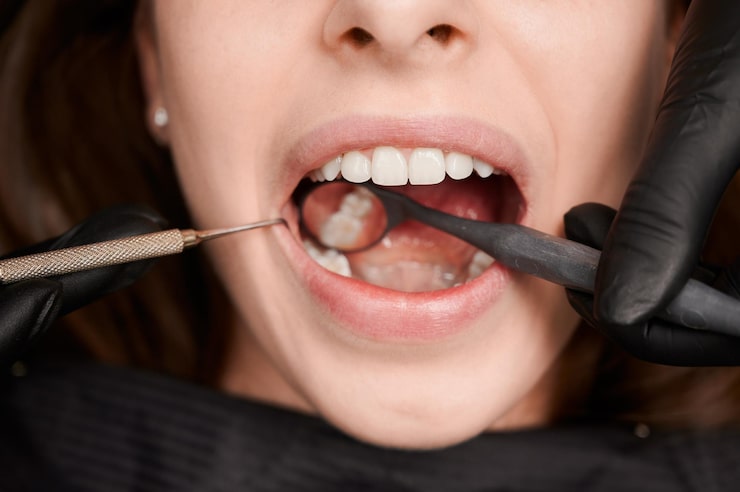
Here is how the appointment itself unfolds, step by step:
- Numbing. Local anaesthetic fully numbs the tooth, gum and surrounding bone. You should feel nothing sharp.
- Access. A small incision opens the gum so your dentist can see the tooth clearly.
- Removal. The tooth is loosened and lifted out, sectioned into pieces first if that protects the bone.
- Cleaning the socket. The site is cleaned, and a bone graft may be placed if you are planning an implant later.
- Stitches. Sometimes needed. They may dissolve on their own or be removed at a follow-up visit.
- Gauze and instructions. You bite on gauze for 30 to 45 minutes and leave with clear aftercare guidance.
Throughout, you will feel pressure and movement but no pain. If anything feels sharp, say so straight away and more anaesthetic is given. Most single-tooth cases are finished in well under an hour.
| Tooth hurting right now? Do not wait for it to settle on its own. Call Smiley Dental Lowell on 978-999-9000 or request an appointment online. We offer same day emergency care for urgent problems. |
After: Recovery Day by Day
Healing follows a fairly predictable pattern. Most patients are back to their usual routine within two to three days, while the bone underneath quietly fills in over several weeks.
| Timeframe | What to Expect | What to Do |
| First 24 hours | Mild bleeding and oozing | Bite on gauze 30 to 45 minutes, cold compress 10 minutes on and off, rest |
| Days 2 to 3 | Swelling peaks, then starts to ease | Soft cool foods, begin warm salt-water rinses, avoid strenuous exercise |
| Days 4 to 7 | Discomfort fades noticeably | Gentle rinsing, return to light routine, keep the site clean |
| Week 2 | Gum surface largely healed | Resume normal brushing around the area |
| Weeks to months | Bone fills the empty socket | Attend follow-ups, discuss replacing the tooth |
Aftercare Rules That Actually Matter
- Protect the blood clot. No spitting, rinsing, straws or smoking for the first 24 hours.
- Use cold compresses in 10 minute cycles to control swelling on day one.
- Start warm salt-water rinses after 24 hours, letting the water fall gently from your mouth.
- Eat soft, cool foods and chew on the opposite side.
- Skip heavy lifting and strenuous exercise for 2 to 3 days.
- Take any prescribed medication as directed, once the numbness has worn off.
| Expert Dental Tip The blood clot in the socket is doing all the healing. Dislodge it and you get dry socket, which is genuinely painful and sets your recovery back. The classic warning sign is pain that gets worse rather than better around days three to five. For a full week, avoid straws, smoking and forceful rinsing. If pain does start climbing, ring us. A quick in-office dressing brings fast relief. |
Normal Healing vs When to Call
Mild bleeding, soreness and swelling that improves after 48 hours are all perfectly normal. Ring your dentist if you notice:
- Bleeding that will not stop
- A fever, or a foul odour or taste
- Pain that increases after days three to five
- Swelling that keeps worsening rather than settling
| Seek emergency care immediately If you have difficulty breathing or swallowing, or bleeding you cannot control, call 911 or go to your nearest emergency department. These are rare, but they need urgent attention rather than a dental appointment. |
How Much Does Surgical Teeth Removal Cost?
Cost depends on how deeply the tooth sits in the bone, because that determines how much surgical time is involved. Typical 2026 per-tooth figures in the United States:
| Type of Extraction | Typical Cost Per Tooth | Notes |
| Simple extraction | $150 to $350 | Fully erupted, easy to reach |
| Surgical extraction (erupted tooth) | $250 to $600 | Gum opened or tooth sectioned |
| Soft tissue impaction | $250 to $450 | Tooth covered by gum only |
| Partial bony impaction | $350 to $650 | Part of the tooth embedded in bone |
| Full bony impaction | $400 to $800 or more | Tooth fully enclosed in bone |
Figures are 2026 national estimates drawn from ADA fee data and published provider pricing. Sedation and 3D imaging are additional. You always receive a written estimate before treatment begins.
Most dental plans treat surgical extractions as a major procedure and cover a share of the cost once your deductible is met. Many plans also cover X-rays and oral surgery. If you would rather spread payments, ask about our patient financing options, including Cherry, CareCredit and Sunbit.
Replacing the Tooth Afterwards
Unless it was a wisdom tooth, the gap deserves a plan. Left empty, the jawbone in that spot begins to shrink and neighbouring teeth drift out of line. The most durable solution is the dental implants procedure, where a titanium post is placed into the jaw and topped with a crown once it has fused with the bone.
If an implant is not the right fit for you, dental crowns and bridges or a partial denture will restore your bite and keep your smile even. Your dentist will talk through all of it at your aftercare visit.
Why Choose Smiley Dental Lowell
Precise, comfortable extractions come down to training and planning. Our Lowell team includes a dentist who completed an Oral and Maxillofacial Surgery internship at Massachusetts General Hospital and Harvard Medical School and has served as clinical faculty at Harvard School of Dental Medicine, a dentist with an ICOI Fellowship who is certified in surgically placing implants, and colleagues who trained in Surgical Implantology at UCLA and earned honours in Oral Surgery and Periodontics.
We have been recognised among America’s Best dentists in recent years. Our multilingual team offers Saturday appointments and cares for patients across Lowell, Dracut, Chelmsford, Tewksbury, Tyngsborough, Methuen and the wider Merrimack Valley.
Complete Your Smile: Related Treatments
Once your mouth has healed, we can help you finish the job. Ask us about teeth whitening, Invisalign clear braces, and porcelain veneers to complete your care.
The Bottom Line
Surgical teeth removal is a routine, well-established procedure that ends pain, halts infection and protects the teeth around it. With proper planning, thorough numbing and sensible aftercare, most patients find the reality far gentler than the version they imagined, and are back to normal within a few days.
Frequently Asked Questions
Not during the procedure. The area is fully numbed with local anaesthetic, so you feel pressure rather than pain, and sedation is available if you are anxious. Afterwards, soreness and swelling for a few days are normal and respond well to prescribed or over-the-counter pain relief.
Most people feel much better within two to three days, and the gum surface heals over roughly two weeks. Full bone healing beneath the surface takes several weeks to a few months. Following the aftercare instructions closely is what speeds it along.
Usually yes, unless your job is physically demanding. Avoid heavy lifting and strenuous exercise for two to three days, since raised blood pressure can restart bleeding. If you had sedation, take the rest of that day off entirely.
Dry socket occurs when the protective blood clot is dislodged, exposing the bone. The giveaway is pain that increases around days three to five instead of easing. Avoid it by not smoking, not using straws, and not rinsing or spitting forcefully for the first week.
Sometimes. Stitches help the gum heal neatly after a surgical extraction. They may be the dissolving kind, or removed at a short follow-up visit. Your dentist will tell you which you have before you leave.
Tell us well before your appointment and bring your full medication list. Many patients on blood thinners have extractions safely, but we coordinate with your doctor first and take extra steps to control bleeding. Never stop a prescribed medication on your own.