
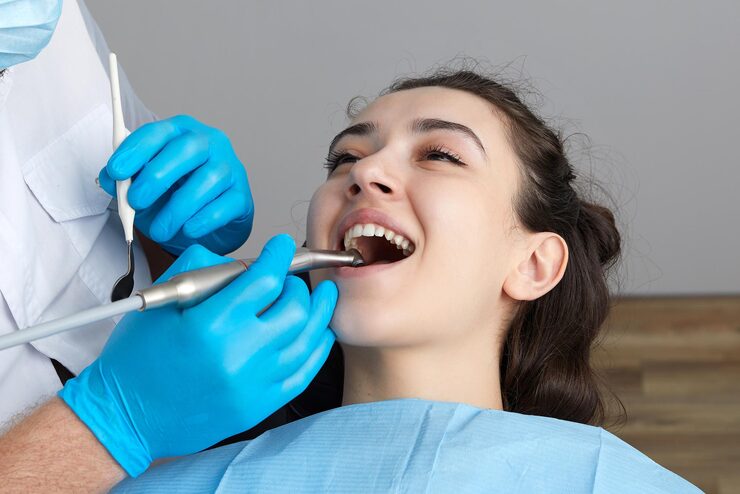
Deep teeth cleaning, known clinically as scaling and root planing, is a dental procedure that removes plaque and tartar from below the gumline and smooths the tooth roots so the gums can reattach. It treats gum disease that has progressed past the surface, which a routine cleaning cannot reach.
It is recommended for patients whose gum disease has caused attachment loss, meaning the gum and bone holding a tooth in place have started to pull away. That is a different situation from simple gum inflammation, and the distinction matters, which this article explains.
Below you will find what the procedure involves step by step, how it differs from a regular cleaning, what recovery realistically feels like, what drives the cost, and how to keep the results once you have them. Smiley Dental Lowell provides dental cleaning services including scaling and root planing for patients across Greater Lowell.
Quick Answer● What it is: cleaning below the gumline, plus smoothing of the tooth roots ● Who needs it: patients diagnosed with periodontitis, where pocket depths and X-rays show attachment and bone loss ● Typical visits: one to two, often split into halves or quadrants of the mouth ● Recovery: roughly two to five days of mild soreness and sensitivity ● Cost: billed per quadrant of the mouth and varies with severity and insurance, covered in the cost section below |
What Is Deep Teeth Cleaning?
Deep teeth cleaning is the common name for scaling and root planing. You may also hear it called a deep dental cleaning, periodontal cleaning, or gum cleaning. All of these describe the same two-part treatment.
Scaling removes plaque and hardened tartar from the tooth surfaces below the gumline, where a toothbrush cannot reach and a routine cleaning does not go. Root planing smooths the root surfaces afterward, so that bacteria have less to cling to and the gum tissue has a clean surface to reattach against.
Here is a point worth being precise about, because a lot of articles blur it. Deep cleaning is the treatment for periodontitis, meaning gum disease that has already caused loss of attachment between the gum, bone, and tooth. Gingivitis, which is gum inflammation without that attachment loss, is usually managed with a routine cleaning and better home care rather than scaling and root planing.
That distinction is not a technicality. It is the difference between a treatment that is clinically indicated and one that is not.
Deep Cleaning vs. Regular Cleaning
| Regular Cleaning (Prophylaxis) | Deep Cleaning (Scaling and Root Planing) | |
| Purpose | Preventive maintenance for healthy gums | Treatment for diagnosed periodontitis |
| Depth | At and just below the gumline | Deep below the gumline, down the root surface |
| Anesthesia | Rarely needed | Local anesthetic commonly used |
| Number of visits | One | Usually one to two, often split by quadrant |
| Who it is for | Patients with healthy gums or mild inflammation | Patients with attachment and bone loss confirmed on exam and X-rays |
| Follow-up | Routine cleaning at the usual interval | Periodontal maintenance at a shorter interval, often every three to four months |
The reason a regular cleaning cannot treat gum disease is mechanical. A routine cleaning works on what the instruments can reach, which is the crown of the tooth and the shallow space just under the gum. Once a pocket has formed and deepened, the tartar sits further down the root than a routine cleaning goes, so the bacteria causing the problem are left in place.
If your gums are healthy and you are simply due a checkup and clean, that is a different appointment. Our guide to professional dental cleanings in Lowell covers what a routine visit involves.
Signs You May Need a Deep Teeth Cleaning
These are reasons to be assessed, not a self-diagnosis:
✓ Gums that bleed when you brush or floss
✓ Red, swollen, or tender gums
✓ Persistent bad breath or a bad taste that brushing does not fix
✓ Gums pulling back, making teeth look longer
✓ Teeth that feel loose or have shifted position
✓ Pocket depths above 3 mm recorded during a dental exam
Only a dentist can confirm whether deep cleaning is needed, and pocket depth alone does not decide it. The diagnosis combines pocket measurements, signs of attachment loss, and X-ray evidence of bone loss. A deepened pocket without attachment loss points to a different treatment than a deepened pocket with it.
Deep Cleaning Procedure: Step by Step
Step 1: Exam, X-Rays, and Gum Measurements
Your dentist or hygienist measures the pocket depth around each tooth with a small probe, checks for bleeding and recession, and reviews X-rays for bone loss. This is what produces the diagnosis and determines how much of the mouth needs treating.
Step 2: Local Anesthesia and Comfort Options
The area being treated is numbed with local anesthetic so that you do not feel the instruments working below the gumline. Numbing is usually given one section at a time rather than across the whole mouth, which is part of why treatment is often split across visits.
Step 3: Scaling
Plaque and tartar are removed from the tooth surfaces below the gumline using hand instruments, an ultrasonic scaler, or both. The ultrasonic instrument uses vibration and a water spray, so expect to feel vibration and hear noise even though the area is numb.
Step 4: Root Planing
The root surfaces are then smoothed. A rough root surface gives bacteria somewhere to re-establish and makes it harder for gum tissue to reattach, so this step is what gives the gums a chance to heal tightly against the tooth again.
Step 5: Rinse and Antibacterial Treatment If Needed
The area is irrigated to flush out debris. In some cases a dentist may place a local antimicrobial into deeper pockets or recommend a prescription rinse. This is case by case rather than routine.
How long it takes. Most patients are treated over one or two appointments, each typically lasting about an hour to ninety minutes. The mouth is usually divided into quadrants, and treatment is commonly done two quadrants at a time, so that only one side is numb at once and you can still eat comfortably afterward.
What you feel during treatment. With the area numb, patients generally report pressure, vibration, scraping sensations, and the sound of the instruments rather than pain. If anything sharp breaks through, say so during the appointment. More anesthetic can be given.
Is Deep Teeth Cleaning Painful?
During the procedure, usually not. The area is numbed with local anesthetic, and most patients describe pressure and vibration rather than pain. The discomfort people actually remember tends to come afterward, once the numbness wears off.
For a day or two the gums are often tender, and teeth can feel sensitive to cold. That sensitivity happens because tartar that was covering part of the root has been removed, exposing a surface that was previously insulated. It usually settles as the gums heal and tighten.
Can you have a deep cleaning without anesthesia? Sometimes, yes. If pockets are shallow and the deposits are light, some patients are comfortable without it. For deeper pockets or heavier tartar, most people are considerably more comfortable numb, and being numb also lets the clinician work thoroughly rather than tentatively. It is worth discussing rather than deciding in advance.
If dental anxiety is the real concern, say so when you book rather than on the day, so the team can plan the appointment around it.
| EDITOR NOTE, remove before publishing: Confirm which comfort options the practice actually offers, such as topical anesthetic, nitrous oxide, or any sedation, and add them to this section. Nothing has been claimed here, because the options were not supplied. |
How Much Does Deep Teeth Cleaning Cost?
Deep cleaning is not priced as one flat fee for the whole mouth. It is billed by quadrant, meaning the mouth is divided into four sections, and you are charged for the sections that actually need treatment. Someone needing two quadrants pays roughly half what someone needing four would.
Within each quadrant, the fee also depends on how many teeth are involved. Dental coding distinguishes a quadrant with four or more affected teeth from one with only one to three, and the two are billed differently.
The factors that move the number:
- How many quadrants need treatment
- How many teeth are affected within each quadrant
- The severity of the disease and how much tartar has built up
- Whether local anesthesia or additional antimicrobial treatment is used
- Your geographic area and the individual practice’s fee schedule
- Your insurance plan, deductible, and remaining annual maximum
On insurance: many dental plans cover scaling and root planing when it is documented as medically necessary, which typically means the pocket depths, attachment loss, and X-ray findings support the diagnosis. Coverage is commonly partial rather than complete, and some plans require prior authorization. Ask your office to verify benefits and give you a written estimate before treatment starts, not after.
On timing: treating gum disease earlier is almost always less expensive than treating it later. Early intervention is a non-surgical cleaning. Advanced disease can mean surgical treatment, and eventually tooth loss, which brings the cost of replacing teeth into the picture. The least expensive version of this problem is the one caught at a checkup.
| EDITOR NOTE, remove before publishing: Insert the practice’s actual per-quadrant fee range here, and confirm what payment or financing options are available before describing any. No dollar figures or payment plans have been stated anywhere in this article, because none were supplied and the published ranges available online are not from sources worth citing. |
For a figure that reflects your mouth rather than an average, call Smiley Dental Lowell for a personalized estimate after an examination.
Deep Cleaning Recovery: What to Expect
Timeline
Day 1: numbness wears off over a few hours. Gums feel tender and may bleed slightly when brushed. Teeth are often sensitive to cold.
Days 2 to 3: tenderness usually peaks and then starts easing. Most people are back to normal eating by the end of this window.
Week 1: soreness generally resolves. Sensitivity can linger a little longer and typically fades as the gums tighten against the teeth.
These are typical patterns rather than a schedule. Someone treated for advanced disease across four quadrants will usually have a longer recovery than someone treated in two.
Normal Side Effects
Gum tenderness, mild bleeding when brushing, sensitivity to hot and cold, and slightly loose-feeling teeth in the first days are all common. That last one surprises people, and it happens because swelling that was propping the gums up has gone down. It usually settles as healing progresses.
Aftercare Tips
✓ Stick to soft foods for the first day or two, and avoid very hot, very cold, crunchy, or spicy items
✓ Rinse gently with warm salt water, about half a teaspoon in a cup of warm water, a few times daily
✓ Brush gently with a soft brush, and keep cleaning the treated areas rather than avoiding them
✓ Use a desensitizing toothpaste if cold sensitivity is bothering you
✓ Avoid smoking, which slows gum healing and is one of the strongest risk factors for gum disease returning
✓ Take any medication exactly as your dentist directed, and follow the specific instructions you were given
When to Call Your Dentist
Contact the office if you have severe or worsening pain rather than improving soreness, swelling that is spreading, a fever, bleeding that does not stop, or any symptom that concerns you. Discomfort that is slowly improving is normal healing. Discomfort that is getting worse after the first few days is not, and it should be looked at.
Benefits and Risks of Deep Teeth Cleaning
Benefits. Scaling and root planing halts the progression of gum disease, which is the main point. Patients typically see bleeding reduce, gum inflammation settle, pockets shrink as tissue tightens, and breath improve. Most importantly, it preserves teeth that would otherwise be at risk, since gum disease is a leading cause of tooth loss in adults.
There is also a broader health dimension. Oral health and general health are connected, and untreated gum disease is associated with conditions including heart disease and poorly controlled diabetes. Association is not the same as causation, and it would overstate the evidence to say treating your gums will prevent those conditions. It is still a reason to take gum disease seriously rather than ignore it.
Risks. The common ones are temporary: gum tenderness and tooth sensitivity for several days, slight bleeding, and gums that recede a little as swelling resolves, which can make teeth look marginally longer. Infection after treatment is uncommon but possible, which is why the warning signs above are worth knowing.
The risks of treatment are short term and manageable. The risk of leaving periodontitis untreated is progressive and permanent, because bone that has been lost does not grow back.
How to Maintain Results After Deep Cleaning
A deep cleaning is the start of managing gum disease, not the end of it. Most patients return four to six weeks afterward so the gums can be reassessed and pocket depths measured again, which shows how well the tissue responded.
After that, routine care changes. Instead of a standard cleaning at the usual interval, patients move to periodontal maintenance, commonly every three to four months. Your dentist sets the interval based on how your gums respond rather than on a fixed rule, and it can be lengthened or shortened over time.
Daily care carries most of the weight between visits:
- Brush twice daily for two minutes with a soft brush and fluoride toothpaste
- Clean between the teeth every day with floss, interdental brushes, or a water flosser
- Ask which interdental tool suits your spacing, since wider gaps after treatment often suit small brushes better than floss
- Stop smoking if you smoke, which does more for gum health than any product you can buy
- Keep the maintenance appointments, since gum disease recurs quietly and painlessly
Why Choose Smiley Dental Lowell for Deep Teeth Cleaning?
Scaling and root planing is a procedure where the diagnosis matters as much as the treatment. It should follow a full periodontal assessment with pocket measurements and X-rays, and you should leave understanding why it was recommended and what happens next.
That is how we approach it. You can see the clinicians who would be treating you on our meet our doctors page, and read about the wider team, including the hygienists who perform most deep cleanings, on our our staff page.
EDITOR NOTE, remove before publishingThe brief asked for the items below, and none were supplied, so nothing about them is claimed anywhere in the article. Fill each in before this goes live: ● NAP block: exact business name, street address, and phone number, formatted identically to the Google Business Profile and every other listing ● Office hours and a click-to-call phone number for the CTA ● Embedded Google Map iframe ● Team credentials and years of experience, stated only where they can be verified ● Any patient review or testimonial, used only with written permission. None has been invented here. ● Comfort and sedation options, referenced in the pain section ● Per-quadrant fee range and any payment or financing options, referenced in the cost section |
Frequently Asked Questions
How long does deep teeth cleaning take?
Most patients are treated across one or two appointments of roughly sixty to ninety minutes each. The mouth is usually divided into quadrants and treated two at a time, so only one side is numb at once. How many visits you need depends on how many quadrants are affected and how much tartar has built up.
Does deep cleaning hurt?
Not usually during the procedure, because the area is numbed with local anesthetic and most patients feel pressure and vibration rather than pain. Afterward, expect gum tenderness and cold sensitivity for a few days as the numbness wears off and the gums begin healing. Sensitivity typically fades as the tissue tightens.
How much does a deep cleaning cost without insurance?
It is billed per quadrant rather than as one flat fee, so the total depends on how many of the four sections need treatment and how many teeth are involved in each. Severity, anesthesia, and local fee schedules also affect it. Ask for a written estimate after your examination rather than relying on an average.
How often should you get a deep cleaning?
Deep cleaning is not a routine procedure you repeat on a schedule. It is done when periodontitis is diagnosed. Afterward you move to periodontal maintenance cleanings, commonly every three to four months, with the interval set by how your gums respond. A repeat deep cleaning is only needed if disease progresses again.
Can deep cleaning reverse gum disease?
It depends on the stage. Gingivitis, inflammation without attachment loss, is reversible. Periodontitis is not fully reversible, because bone and attachment already lost do not grow back with scaling and root planing. What treatment does is stop the progression, reduce inflammation, and allow pockets to shrink as tissue tightens, which protects the teeth you still have.
What can I eat after a deep cleaning?
Soft foods for the first day or two: eggs, yogurt, soup that is not hot, pasta, mashed vegetables, and smoothies without a straw. Avoid very hot, very cold, crunchy, seedy, or spicy foods while the gums are tender. Wait until the numbness has fully worn off before eating, to avoid biting your cheek or tongue.
Is deep teeth cleaning worth it?
If periodontitis has been diagnosed, yes, because the alternative is letting it progress. Untreated gum disease is a leading cause of adult tooth loss, and the bone it destroys does not come back. A few days of soreness compares favorably with eventual surgical treatment or replacing teeth. It is worth it when it is actually indicated.
Does insurance cover deep teeth cleaning?
Many dental plans cover scaling and root planing when documentation shows it is medically necessary, meaning pocket depths, attachment loss, and X-ray findings support the diagnosis. Coverage is often partial, and some plans require prior authorization or limit how often it can be repeated. Have the office verify your specific benefits before treatment begins.
Book Your Appointment
Deep teeth cleaning treats gum disease that a routine cleaning cannot reach, by removing tartar from below the gumline and smoothing the roots so the gums can reattach. Most patients need one or two visits and feel tender for a few days afterward. It is recommended when an examination confirms periodontitis, and it works best when the disease is caught early rather than late.
If your gums bleed when you brush, or it has been a while since your last checkup, an assessment is the sensible next step. Book your appointment with Smiley Dental Lowell online or call the office, and we will measure, explain what we find, and tell you plainly whether a deep cleaning is actually needed.