Noticing that your teeth look longer than they used to, or wincing at a cold drink you used to enjoy, is unsettling. Both are classic signs of teeth gum recession.
Here is the direct answer. Cosmetic dentistry can improve the look of receding gums and protect exposed roots, but gum tissue does not grow back on its own. Lasting results depend on treating whatever caused the recession in the first place, which is why appearance-focused treatment alone tends to disappoint.
This guide from Smiley Dental Lowell covers what gum recession is, what causes it, which treatments actually restore gum coverage versus which only improve appearance, how they compare, and how to stop it progressing.
In This Article● What gum recession is, and the signs to watch for ● What causes it, and why the cause decides the treatment ● What cosmetic dentistry can and cannot fix ● Whether gum recession has stages, and how it is actually classified ● Eight treatment options compared side by side ● How to prevent it getting worse, and when to see a dentist |
What Is Gum Recession?
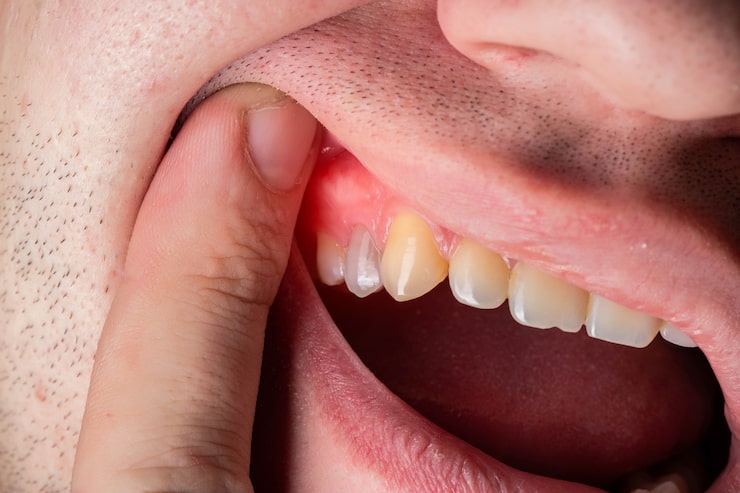
Gum recession is gum tissue pulling back from the tooth, exposing more of the tooth and eventually the root surface underneath. The root is not covered by enamel, so once it is exposed it behaves differently from the rest of the tooth.
That is why it matters beyond appearance. Exposed roots are more sensitive, more prone to decay, and harder to clean, and continued recession is often accompanied by loss of the bone supporting the tooth.
Recession is usually gradual. Most people do not notice it month to month, and many only register it when a tooth starts reacting to cold or when a gumline looks visibly uneven next to its neighbors. By then it has often been developing for years.
Common Signs and Symptoms of Receding Gums
- Teeth that look longer than they used to
- Sensitivity to hot, cold, or sweet foods and drinks
- A visible notch or step near the gumline where root meets enamel
- Red, swollen, or bleeding gums
- Persistent bad breath, or teeth that feel loose
A useful self-check: compare the same tooth on the left and right sides of your mouth in a mirror. Recession is frequently worse on one side, often the side you brush hardest, and an asymmetry is easier to spot than a slow change.
What Causes Gum Recession?
- Gum disease, particularly periodontitis, which destroys the supporting tissue around teeth
- Brushing too hard, or using a hard-bristled toothbrush
- Genetics and naturally thin gum tissue, which recedes more readily
- Teeth grinding or clenching, which loads teeth in ways they were not designed for
- Tobacco use
- Hormonal changes, which can make gum tissue more vulnerable
- Misaligned teeth or an uneven bite, concentrating force on particular teeth
- Lip or tongue piercings rubbing against the gumline
Identifying the cause is not an academic exercise, because the cause determines which treatment will hold. Recession from aggressive brushing needs a technique change. Recession from periodontitis needs the disease treated. Recession from grinding needs the grinding addressed. Cover the root without fixing the cause and you will be back. Our overview of gum disease causes, symptoms, and early detection goes deeper on the disease side.
Can Cosmetic Dentistry Fix Gum Recession?
Partly. Cosmetic procedures can restore the appearance of the gumline and cover exposed roots, which addresses both sensitivity and how the smile looks. What they cannot do is regrow gum tissue, and they do not stop the process that caused the recession.
The categories overlap more than the labels suggest. Cosmetic treatment targets appearance, such as bonding or veneers. Restorative treatment rebuilds damaged tooth structure, such as a filling in a notched root. Periodontal treatment deals with the gums and supporting bone, including deep cleaning and gum grafting. Gum grafting is the clearest overlap: it is surgical periodontal treatment that also produces a cosmetic result.
Set expectations accordingly. Bonding and veneers mask the problem well and relieve sensitivity. Only grafting and related procedures actually restore tissue coverage over the root. Gums do not regenerate on their own, and no toothpaste, rinse, or supplement regrows them, whatever the packaging says.
For recession driven by gum disease, periodontal therapy is where treatment starts, because cosmetic work placed over active disease does not last.
Is There a Stage 1 or Stage 4 of Gum Recession?
People search for stage 1 gum recession and stage 4 receding gums constantly, so this is worth clearing up: gum recession is not staged that way. Staging from I to IV belongs to periodontitis, the gum disease that often causes recession, not to recession itself. The two get conflated online a lot.
Recession is classified instead, and the system used today is the Cairo recession type classification. It compares the attachment loss between the teeth with the loss on the visible surface, because that is what predicts how much root coverage a graft can realistically achieve:
- RT1: no attachment loss between the teeth. Full root coverage is often achievable.
- RT2: attachment loss between the teeth is equal to or less than the loss on the visible surface. Partial to full coverage may be possible.
- RT3: attachment loss between the teeth is greater. Full coverage is generally not achievable.
The older Miller classification, Classes I to IV, maps onto this and you may still hear it used. The practical takeaway is the same either way: what determines your result is not how long your teeth look, it is how much support has been lost between them. That is measured at an examination, not estimated in a mirror.
Research indicates that recession under about 3 mm with a thick band of gum tissue has the most predictable outcome for complete root coverage. Beyond that, coverage depends on tooth, site, and patient factors, and complete coverage is not always possible. An honest conversation about the realistic result belongs at the consultation.
Can teeth be saved with receding gums? Usually, yes, especially when it is caught before significant bone loss. Teeth are lost to the underlying disease and bone loss rather than to recession itself, which is the argument for treating the cause early. Where teeth have already been lost, dental implants with gum disease is its own careful conversation, because implants need healthy supporting tissue too.
Treatment Options for Gum Recession Explained
Improved Oral Care and Monitoring
Switching to a soft-bristled brush, learning a gentler technique, and keeping up with regular cleanings, plus a night guard if grinding is a factor. Best for early or mild recession where the cause is mechanical rather than disease.
Pros: no procedure, no cost beyond routine care, and it addresses the cause directly. Considerations: it halts progression rather than reversing what has happened, and it requires the habit change to stick.
Deep Cleaning (Scaling and Root Planing)
Removal of plaque and tartar from below the gumline and smoothing of the root surfaces, so gum tissue can reattach. Best for recession linked to gum disease or heavy bacterial buildup.
Pros: treats the underlying cause and is non-surgical. Considerations: usually performed under local anesthetic across one or two visits, with several days of tenderness, and it commonly needs ongoing periodontal maintenance afterward.
Dental Bonding (Tooth-Colored Resin)
Composite resin applied over the exposed root surface to seal it and improve how the tooth looks. Best for localized recession with sensitivity, especially where a notch has worn into the root.
Pros: quick, minimally invasive, often completed in one visit, and effective against sensitivity. Considerations: it covers the root rather than restoring gum tissue, and bonding can stain or chip over time and need replacing.
Porcelain Veneers or Crowns
Custom restorations that change the proportions of a tooth, making a longer-looking tooth appear more balanced. Best for cases where appearance is the main concern and other issues need addressing at the same time.
Pros: strong cosmetic result and durable materials. Considerations: they do not regrow gum tissue, they involve removing healthy tooth structure, and placing them before the cause is controlled is a reliable way to waste the investment.
Gum Grafting
A surgical procedure that adds tissue over the exposed root, using tissue taken from elsewhere in your mouth or from a donor source. Variations include connective tissue grafts, free gingival grafts, and pedicle grafts. Best for moderate to severe recession where genuine coverage is the goal.
Pros: the standard for actually restoring gum coverage, and it protects the root long term. Considerations: it is surgery, with a healing period usually measured in weeks, and how much coverage is achievable depends on your recession type. Some cases are referred to a periodontist. Our page on periodontal disease surgery in Lowell covers the surgical side in more detail.
Pinhole Surgical Technique
A minimally invasive approach in which gum tissue is loosened through a small opening and repositioned over the exposed root, without cutting or stitches. Best for suitable cases of recession across multiple adjacent teeth.
Pros: no donor site, no sutures, and generally a faster recovery than traditional grafting. Considerations: suitability varies considerably, it requires specific training so it is not offered everywhere, and an evaluation is needed to know whether you are a candidate. It may involve a referral.
Orthodontic Treatment
Moving teeth into better alignment so that force is distributed evenly and crowded teeth sit within the supporting bone. Best for recession caused or worsened by misalignment or a problematic bite.
Pros: addresses a root cause that no cosmetic procedure can fix, and benefits cleaning as well. Considerations: a long treatment timeline measured in months to years, and gum health needs to be stable before orthodontic treatment begins.
Gum Contouring
Reshaping the gumline by removing excess tissue. Included here to clear up a common misconception: contouring is for too much gum tissue or an uneven gumline, not for recession.
Pros: effective for a gummy smile or asymmetry. Considerations: it removes tissue rather than adding it, so it is the wrong treatment for exposed roots. If a provider proposes contouring for recession, ask them to explain the reasoning.
Treatment Comparison Table
| Option | Best For | Improves Appearance | Covers Exposed Root | Invasiveness |
| Improved oral care | Early or mild, mechanical causes | No | No | None |
| Deep cleaning | Recession from gum disease | Indirectly | No | Low |
| Dental bonding | Localized recession with sensitivity | Yes | Yes, with resin | Low |
| Veneers or crowns | Appearance-led cases | Yes | Partially | Moderate |
| Gum grafting | Moderate to severe recession | Yes | Yes, with tissue | High, surgical |
| Pinhole technique | Suitable multi-tooth cases | Yes | Yes, with tissue | Moderate, surgical |
| Orthodontic treatment | Misalignment or bite causes | Indirectly | Sometimes | Moderate, long term |
| Gum contouring | Excess or uneven gum tissue | Yes | No | Low to moderate |
Which Treatment Is Right for You?
Five things shape the answer: how severe the recession is, what caused it, how thick your gum tissue is, your budget, and what you actually want to achieve. Someone whose main complaint is cold sensitivity on one tooth has a different sensible plan from someone unhappy with how their whole smile looks.
This is why a personalized examination comes first. Your dentist measures pocket depths around each tooth, records how much recession is present, checks for attachment loss between the teeth, assesses gum thickness, and reviews X-rays for bone loss. Those measurements, not the appearance alone, determine what is achievable.
A referral to a periodontist is sometimes the right recommendation, particularly for advanced recession, complex grafting, or cases where the supporting bone is significantly affected. A dentist who refers when appropriate is doing the job properly rather than passing you around.
What to Expect at Smiley Dental Lowell
A gum health consultation starts with an examination and a full set of gum measurements, plus X-rays where needed. We talk through what the measurements show, what caused the recession in your case, and what you want to change about it, because those answers point to different plans.
From there you get a personalized plan that pairs the treatment for the cause with whatever cosmetic work makes sense afterward, in that order. You can read about the clinicians who would be caring for you on our meet our doctors page.
| EDITOR NOTE, remove before publishing● Confirm which procedures are performed in house and which are referred, then state it plainly in this section. The article currently says grafting and the pinhole technique may involve a referral without claiming either way for this practice.
● Add the NAP block to the conclusion: exact business name, street address, phone, and hours, formatted identically to the Google Business Profile. None has been invented. ● Add the comfort and sedation options the practice actually offers. Nothing is claimed here. ● Convert the In This Article box to jump links when this goes into the CMS. The bullets match the H2 headings, so they can be anchored directly. ● Image to add: a side-by-side diagram of a healthy gumline versus a receding one, placed in the What Is Gum Recession section. Suggested alt text: Diagram comparing a healthy gumline with teeth gum recession exposing the tooth root. |
How to Prevent Gum Recession from Getting Worse
✓ Use a soft-bristled brush and let the bristles do the work rather than pressing hard
✓ Angle the brush toward the gumline and use small circular motions instead of a hard scrub
✓ Clean between your teeth daily, gently, with floss or interdental brushes
✓ Keep up with checkups and cleanings so changes get measured rather than guessed at
✓ Wear a night guard if you grind or clench
✓ Stop using tobacco, which impairs gum healing and worsens gum disease
✓ Raise any new sensitivity early rather than waiting for your next routine visit
Ongoing periodontal dental care in Lowell is what keeps treated recession stable. Gum problems recur quietly and without pain, so the measurements taken at each visit are how you find out early rather than late.
When to See a Dentist About Receding Gums
Book an evaluation if you have persistent sensitivity that does not settle, gums that bleed regularly when you brush, a gumline that has visibly changed over months rather than years, or any tooth that feels loose.
Rapid change deserves prompt attention. Recession that progresses quickly usually means something active is driving it, and the earlier that is identified the more of your options stay open. Waiting rarely improves the picture, and the treatments available for mild recession are simpler and less invasive than those needed later.
Frequently Asked Questions
Can receding gums grow back?
No. Gum tissue does not regenerate on its own, and no toothpaste, rinse, oil, or supplement will regrow it. What treatment can do is cover the exposed root, either with resin or with grafted tissue, and stop further recession by addressing the cause. Earlier treatment preserves more of what you still have.
Can cosmetic dentistry fix receding gums?
Partly. Bonding, veneers, and crowns improve how the gumline and teeth look and can relieve sensitivity, but they do not restore gum tissue or stop the underlying process. Gum grafting is the procedure that actually restores coverage. Whatever the approach, the cause has to be treated or the result will not last.
Is gum grafting painful?
The procedure itself is done under local anesthetic, so you should not feel pain during it. Afterward, expect soreness for several days, particularly at the donor site if tissue was taken from your palate. Most patients manage with the pain relief their dentist recommends and describe it as uncomfortable rather than severe.
How much does gum recession treatment cost?
It varies widely with the treatment, how many teeth are involved, and the severity, so we are not quoting a figure here. Bonding sits at the lower end and grafting considerably higher. Ask for a written, itemized estimate after your examination, and check what your dental insurance contributes, since periodontal treatment is often handled differently from cosmetic work.
Can bonding cover exposed roots?
Yes. Composite resin bonded over an exposed root seals the surface, reduces sensitivity, and improves appearance, often in a single visit. It is covering the root rather than restoring gum tissue, and bonding can stain or chip over time and need replacing, but for localized recession with sensitivity it is a practical option.
Do receding gums always need surgery?
No, and most cases do not. Mild recession is often managed with a change in brushing technique, a soft brush, a night guard if grinding is involved, and monitoring. Deep cleaning handles disease-related cases non-surgically. Grafting is reserved for moderate to severe recession where restoring actual tissue coverage is the goal.
How long do gum recession treatments last?
It depends far more on what happens afterward than on the procedure. A graft or bonding placed while aggressive brushing, grinding, or untreated gum disease continues will not hold. With the cause addressed and good maintenance, results can last many years. Ongoing periodontal maintenance visits are what protect the investment.
Is gum recession serious?
It can be. Mild recession may only mean sensitivity, but recession is often a visible sign of underlying gum disease and bone loss, which are the things that cost people teeth. It also leaves roots exposed to decay. The seriousness depends on the cause and how much support has been lost, which an examination determines.
How do I know if my gum recession is from gum disease?
You generally cannot tell from looking. Recession from aggressive brushing often affects the side you brush hardest and comes with healthy-looking gums elsewhere, while disease-related recession usually brings bleeding, swelling, and deeper pockets. The reliable answer comes from pocket measurements and X-rays showing whether bone has been lost.
Conclusion and Next Steps
Cosmetic dentistry can meaningfully improve how a receding gumline looks and can protect exposed roots from sensitivity and decay. What it cannot do is regrow gum tissue or stop whatever caused the recession. Treat the cause first, then address the appearance, and the result holds. Reverse that order and it does not.
If your teeth look longer than they used to, or cold drinks have started to hurt, an evaluation is the sensible next step. Book a gum health and smile consultation with Smiley Dental Lowell, and we will measure what is actually happening and tell you plainly what can and cannot be improved.