
⚡ Quick Answer
You are usually a candidate for surgical dental implants if you have one or more missing teeth, healthy gums and enough jawbone to anchor the implant. Good general health and being a non-smoker help too. If bone is thin, a graft can restore your eligibility. A short exam and 3D scan confirm whether implants are right for you.
Missing teeth do more than dent your confidence. They shift your bite, strain the teeth around the gap and let the jawbone slowly shrink. Dental implants stop that in its tracks, which is why they have become the gold standard for replacing teeth.
Still, implants involve minor surgery, so it is fair to ask whether you qualify and what recovery really looks like. This guide walks through who makes a good candidate, how the procedure works step by step, how long healing takes, and how to give your new tooth the best possible start.
What Are Surgical Dental Implants?
A dental implant is a small titanium post that a dentist places into the jawbone to act as an artificial tooth root. Once it fuses with the bone, a crown, bridge or denture is fixed on top. Because the post is set surgically, the treatment is often called surgical dental implants, and it is one of the most reliable options in modern restorative dentistry. You can read more about how we place dental implants at our Lowell practice.
Implants have an excellent track record, with reported success rates of around 95 to 98 percent. Just as importantly, they preserve the jawbone that shrinks after tooth loss, which protects your facial shape and neighbouring teeth.
Are You a Candidate for Dental Implants?
Most healthy adults with missing teeth qualify. You are likely a good candidate if you tick most of these boxes:
- One or more missing teeth. Implants suit a single gap, several gaps or a full arch.
- Healthy gums. Gum disease should be treated first so the implant has a stable home.
- Enough jawbone. The bone must be sufficiently dense to support the post. A graft can rebuild it if not.
- Good general health. Well-controlled conditions such as diabetes usually pose no problem.
- Non-smoker, or willing to pause. Smoking slows healing, so stopping before and after surgery improves success.
When You Might Need Extra Preparation
Some patients need a step or two before implants can go in. If a damaged tooth is still in place, it may require surgical teeth removal first. Where the jaw has lost volume, a bone graft rebuilds it, which is needed in roughly 40 to 60 percent of implant cases. These steps add time, and they make long-term success far more likely.
The Dental Implants Procedure, Step by Step
Here is what the dental implants procedure typically involves, from first visit to final tooth:
- Consultation and 3D scan. Your dentist examines your mouth and takes a CBCT scan to measure bone and plan the placement.
- Oral extraction surgery, if needed. Any failing tooth is removed gently, sometimes with a bone graft placed in the socket at the same time.
- Implant placement. The titanium post is surgically set into the jaw under local anaesthesia or sedation. This usually takes one to two hours.
- Healing and osseointegration. Over three to six months, the post fuses with the bone. Lower-jaw implants often heal a little faster than upper-jaw ones.
- Abutment and impressions. Once fused, a connector is attached, and a scan or impression is taken for your custom tooth.
- Final restoration. Your permanent crown, bridge or denture is fitted, completing the treatment.
| Wondering if implants are right for you? A consultation and 3D scan give you a clear yes or no, plus a personalised plan. Call Smiley Dental Lowell at 978-999-9000 or request an appointment online. |
Recovery Timeline: What to Expect
Everyone heals at their own pace, but recovery tends to follow a predictable pattern. The table below is a general guide.
| Stage | What to Expect |
| First 24 to 48 hours | Mild swelling, minor bleeding and tenderness. Rest and use cold packs. |
| Days 3 to 7 | Swelling eases. Most people return to work and light routine. |
| Weeks 1 to 2 | Gums settle and soft-tissue healing is well under way. |
| Months 3 to 6 | The implant fuses with the bone (osseointegration) beneath the surface. |
| After full healing | The permanent tooth is fitted for a strong, lasting result. |
Aftercare Tips for a Smooth Recovery
- Stick to soft, cool foods for the first few days and chew on the other side.
- Keep your head elevated when resting and avoid strenuous activity early on.
- Do not smoke, as it markedly raises the risk of implant failure.
- Rinse gently with warm salt water and follow your dentist’s cleaning advice.
- Take any prescribed medication as directed and attend your follow-up visits.
| Expert Tip If you smoke, treat your implant date as a reason to pause. Studies put implant failure at roughly 11 percent in smokers versus under 5 percent in non-smokers. Stopping for two weeks before and after surgery gives your new implant a much stronger start. |
How Much Do Surgical Dental Implants Cost?
A single implant in the United States generally costs $3,000 to $6,000 in 2026, covering the post, the abutment and the crown. Extra steps affect the total:
- Tooth extraction: around $75 to $650 for a simple removal, more if surgical.
- Bone graft: roughly $200 to $3,000 per site when the jaw needs rebuilding.
- Sedation and 3D imaging: added for comfort and precise planning where needed.
Many plans cover part of the surgery or the crown. Our team is happy to check your benefits, and flexible patient financing helps spread the cost into manageable monthly payments.
Why Choose Smiley Dental Lowell for Implant Surgery
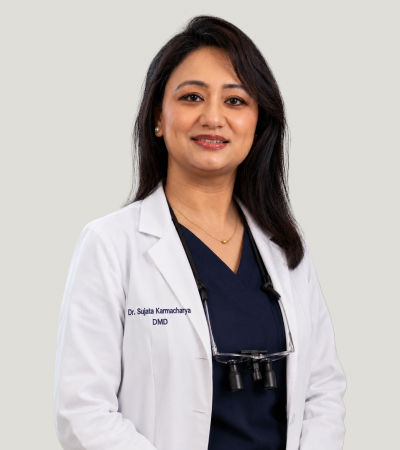
Implant surgery rewards experience. Our Lowell team includes dentists with advanced surgical and implant training, including an oral and maxillofacial surgery internship completed at Massachusetts General Hospital and Harvard, surgical implantology education from UCLA, and an ICOI implant fellowship. We plan every case with 3D imaging for precise, comfortable, minimally invasive treatment.
We have been recognised among America’s Best dentists in recent years and welcome patients across Lowell, Tyngsborough, Chelmsford, Tewksbury and nearby towns, with evening and weekend hours, multilingual care and flexible financing.
Complete Your Smile: Related Treatments
Implants often work alongside other care. Depending on your goals, ask us about crowns and bridges, teeth whitening, root canal treatment, Invisalign clear braces, and porcelain veneers to complete your smile.
The Bottom Line
If you have missing teeth, healthy gums, and a reasonable jawbone, there is a strong chance you are a candidate for surgical dental implants, and even thin bone can often be rebuilt. The surgery is well established, recovery is usually smoother than people expect, and the result is a tooth that looks, feels, and works like your own for many years.
The only way to know for certain is a proper assessment. A short exam and 3D scan will tell you exactly where you stand and map out a plan built around your needs.
| Ready to find out if implants are right for you? Book your implant consultation with Smiley Dental Lowell today. Call 978-999-9000, request an appointment, or contact our Lowell office. New patients are always welcome. |
FAQ Section
Frequently Asked Questions
Everything you need to know about surgical dental implants.