| Quick Answer Dental implants typically take 3 to 6 months to fully heal, though initial soft tissue healing happens within 1 to 2 weeks. Full osseointegration, when the bone fuses with the implant, usually takes 3 to 6 months depending on jaw location and your individual healing. Most of that time is painless and invisible. Factors like bone grafting, smoking, and overall health affect the timeline, so your dentist gives you a personalized estimate. |
If you are getting a dental implant, one of the first things you want to know is how long until it is fully healed and you can get back to normal. The honest answer is that healing happens in stages, and most of it is easier than you expect.
The uncomfortable part, the surgery and first week, is brief. The longer part is silent bone healing you will not even feel. This guide breaks down the full dental implant recovery week by week, so you know exactly what to expect and when.
What Happens During Dental Implant Healing?
Implant healing involves two processes happening in sequence. First, the soft gum tissue closes and seals around the implant, which takes one to two weeks. Then comes the slower, more important phase: osseointegration.
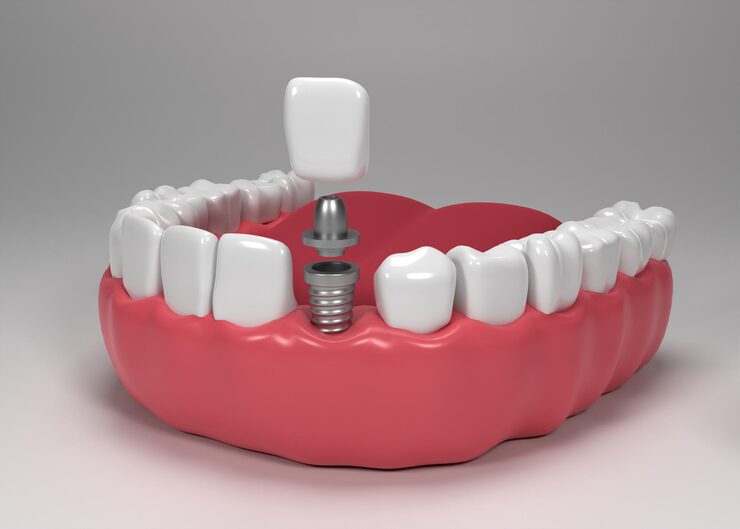
Osseointegration is the natural process where your jawbone grows around and fuses to the titanium implant, turning it into a stable root that can support a tooth. This takes about three to six months and is completely painless. You will feel normal long before it finishes, but the bone is still busy building your foundation underneath.
Healing time varies from person to person because everyone’s bone quality, health, and habits are different. That is why two people can have the same procedure and slightly different timelines. For the full picture, see our step-by-step implant restoration guide.
Dental Implant Healing Timeline: Week by Week
Here is the full recovery journey at a glance, followed by a closer look at each stage. Remember these are general ranges, since healing varies:
| Stage | What Is Happening | How You Feel |
| Week 1 | Soft tissue starts healing | Swelling and soreness, soft foods |
| Weeks 2 to 4 | Gums close, sutures dissolve | Much better, mostly normal |
| Months 1 to 3 | Early bone fusion begins | Feel fine, healing is silent |
| Months 3 to 6 | Osseointegration completes | Ready for the crown |
| Month 6+ | Permanent crown placed | Full function restored |
Week 1: Initial Recovery
The first few days are the most noticeable part of recovery. Swelling and mild discomfort peak around day two or three, then steadily ease. Over-the-counter or prescribed pain relief and a cold compress keep you comfortable. Stick to soft, cool foods, rest, and avoid disturbing the site. Most people return to work within a day or two.
Weeks 2 to 4: Soft Tissue Healing
Your gums close in around the implant, forming a protective seal, and the tissue shifts from red to healthy pink. Any non-dissolving stitches are usually removed at a follow-up around one to two weeks. By the end of this stage, most visible healing is done and you feel largely back to normal, though the bone underneath is just getting started.
Months 1 to 3: Early Osseointegration
This is where the real work happens, quietly. The titanium surface and your bone begin fusing together. You will feel fine and can eat most foods comfortably, but it is important to stay gentle with the implant area and keep all your follow-up visits so your dentist can confirm things are on track.
Months 3 to 6: Full Osseointegration
By now the bone has bonded firmly to the implant, making it stable enough to support a tooth. Your dentist confirms successful integration by checking the implant’s stability, often with an X-ray, before moving to the final step.
Month 6 and Beyond: Final Crown
Once integration is confirmed, a small connector called an abutment is placed, and your custom crown is attached on top. This is the moment your smile and full chewing function are restored, and with good long-term implant care, it can last for decades.
| Considering a dental implant in Lowell? The team at Smiley Dental Lowell will map out your personalized treatment and healing timeline. Call 978-999-9000 or request an appointment online. |
Can Dental Implants Heal in 2 Months?
Usually not fully. While you will likely feel completely normal within a few weeks, full osseointegration takes three to six months. The bone simply needs that time to fuse strongly enough to support a permanent crown.
Placing the final tooth too early risks the implant failing, so the wait protects your long-term result. Lower-jaw implants, which have denser bone, sometimes integrate a little faster than upper-jaw ones, but two months is generally too soon for the permanent restoration in most cases.
Factors That Affect Dental Implant Healing Time
Two people can heal at different speeds. The main factors are:
- Jaw location: lower-jaw implants often heal faster than upper-jaw ones, which have softer bone.
- Bone density and grafting: if you needed a bone graft, add roughly 3 to 6 months for it to heal first.
- Smoking and alcohol: smoking is the biggest controllable risk, slowing healing and raising failure risk.
- Age and overall health: conditions like uncontrolled diabetes can slow healing.
- Oral hygiene during recovery: keeping the area clean with good preventive care prevents infection that could delay healing.
How to Speed Up Dental Implant Healing
You have real influence over how smoothly and quickly you heal. Following your dentist’s aftercare is the single biggest factor. This checklist covers the essentials:
| ✓ Follow all post-op instructions from your dentist closely ✓ Do not smoke, and avoid alcohol during healing ✓ Stick to soft, nutritious foods at first ✓ Use a cold compress and keep your head elevated when resting ✓ Keep the area clean with gentle brushing and any prescribed rinse ✓ Take medications exactly as directed ✓ Attend every follow-up appointment |
What to Eat, and Why Avoid Dairy at First?
For the first few days, choose soft, cool, nourishing foods like smoothies, soups, mashed potatoes, and eggs. Avoid hard, crunchy, spicy, or very hot foods that could irritate the site. Our guide on what to eat after dental work has more soft-food ideas.
Many dentists also suggest limiting dairy for the first 48 to 72 hours. That surprises people, but there are good reasons: dairy can cause nausea when combined with post-surgery antibiotics, and milk-based foods can leave a film that is hard to clean around the healing site, which may raise infection risk. After the first couple of days, dairy is usually fine again as you gradually return to a normal diet.
How Long Should You Rest After a Dental Implant?
Plan to take it easy for the first 24 to 72 hours. Most people rest for a day or two and can return to work or light activity within one to three days, depending on how they feel and how physical their job is.
Avoid strenuous exercise, heavy lifting, and bending over for about a week, since these can increase swelling and bleeding at the site. Listen to your body, and ease back into your routine as the discomfort fades over the first several days.
Signs of Normal vs Delayed Healing
Knowing what is normal helps you relax, and knowing the warning signs helps you act quickly if something is off.
- Normal healing: mild swelling and discomfort that fade within days, tissue turning from red to pink, and steadily decreasing soreness.
- Warning signs: pain that worsens after the first week, swelling or fever that signals infection, pus, or an implant that feels loose or mobile.
| When to Call Your Dentist Contact your dentist right away if you have severe or worsening pain after the first few days, heavy or ongoing bleeding, signs of infection like fever, spreading swelling, or pus, or if the implant feels loose. These are uncommon, and when caught early they are almost always treatable. Do not wait it out or assume it will pass, a quick call protects your implant. |
What Patients Wish They Knew Before Dental Implants
A few honest insights make the whole experience easier. Patients often say they wish they had known these ahead of time:
- The surgery is easier than expected, often compared to a tooth extraction rather than something dramatic.
- Most of the healing is invisible, so feeling fine does not mean the permanent tooth can go on yet.
- Patience pays off, since rushing the timeline is the main thing that risks failure.
- The result is worth it, with implants that can last decades and feel like natural teeth.
Implants are one of the best long-term solutions for missing teeth, and understanding the process up front makes the journey far less stressful.
Frequently Asked Questions
Most people feel largely normal within one to two weeks, once the swelling and soreness fade. The implant itself keeps integrating with your bone for three to six months, though you will not feel that happening. By the time your crown is placed, it feels just like a natural tooth.
No, the opposite. A bone graft actually adds roughly three to six months to the timeline, since the graft must heal and integrate before the implant can fully fuse. Grafts are worth it, though, because they build the solid foundation an implant needs for long-term success.
Less than most people expect. Discomfort is usually mild, peaks around day two or three, and settles within a week with simple pain relief. The long osseointegration phase that follows is completely painless. Most patients are pleasantly surprised by how manageable recovery is.
Good signs include steadily decreasing swelling, tissue turning from red to healthy pink, and soreness that fades each day. Warning signs are worsening pain after the first week, fever, pus, or a loose implant. If you notice any of these, call your dentist promptly.
Not at first. Stick to soft, cool foods for the first week or two, then gradually return to a normal diet as you heal. Avoid dairy for the first 48 to 72 hours, and be cautious with very hard or sticky foods near the implant until it is fully healed.
Most people return to a fairly normal diet within a few weeks, once soft tissue has healed, while still avoiding very hard foods on the implant side. Full, unrestricted chewing comes once the permanent crown is placed and osseointegration is complete.
Follow your dentist’s instructions closely, avoid smoking and alcohol, eat soft and nutritious foods, keep the area clean, rest early on, and attend all follow-ups. There is no shortcut around osseointegration, but these habits give your body the best conditions to heal on schedule.
With good care, the implant post can last 15 to 25 years or even a lifetime, while the crown on top may need replacing after 10 to 15 years. Daily brushing and flossing plus regular checkups are what make them last for decades.
Final Thoughts
So, how long do dental implants take to heal? Plan on three to six months for full healing, with the hardest part, the first week, being brief and manageable. Soft tissue heals in one to two weeks, then your bone quietly fuses to the implant over several months to build a foundation that can last a lifetime. Your exact timeline depends on your jaw, your health, and habits like smoking, which is why every plan is personal.
The best thing you can do is be patient and follow your aftercare, letting your body heal on its own schedule. If you are thinking about dental implants in Lowell, book a consultation with Smiley Dental Lowell for a personalized plan and timeline. Call 978-999-9000 or request an appointment online today.
| Start your implant journey with confidence. Book a consultation at Smiley Dental Lowell for a personalized implant plan and healing timeline. Call 978-999-9000 or request an appointment online. Find us at 1141 Bridge St, Lowell. New patients are always welcome. |