Imagine sitting down at your favorite restaurant in downtown Lowell, but instead of focusing on the menu, you’re worried about your teeth slipping while you order. If you’re currently getting used to new dentures Lowell, you know that the initial bulky feeling and speech hurdles can be frustrating. It’s perfectly normal to feel a bit anxious about how long it will take for your smile to feel like it truly belongs to you; many patients experience the same initial soreness and hesitation.
We promise that with the right approach and a bit of patience, you’ll be eating and speaking with total confidence in no time. By the end of 2026, it’s projected that nearly 42.5 million Americans will be wearing dentures, and modern technology makes the adjustment period smoother than ever before. This guide explores the first 30 days of your journey, offering expert advice on managing soreness and practical exercises to help you regain your smile’s full function. You will learn how to navigate daily wear without pain and discover tips for enjoying local meals without fear.
At a Glance: Your Journey to a Confident Smile
- Navigate the first 30 days of getting used to new dentures Lowell with professional tips for managing soreness and natural speech changes.
- Discover step-by-step strategies for relearning how to eat your favorite local foods with total confidence and ease.
- Learn how to distinguish between normal adjustment periods and fit issues that require a professional adjustment for long-term comfort.
- Master essential daily maintenance habits to protect your restorative investment and keep your dentures looking and feeling like new.
- Experience the benefits of choosing a supportive, family-oriented dental partner for your restorative journey and ongoing oral health.
What to Expect During Your First 30 Days with New Dentures
Adjusting to a restorative appliance is a process that requires both time and patience. Think of it as the “New Shoe” phase. Just like a high-quality pair of boots, your dentures might feel stiff or bulky at first. Your mouth is incredibly sensitive; it can detect even a tiny hair, so a full set of teeth will naturally feel like a significant change. When you are getting used to new dentures Lowell, remember that this initial awkwardness is a sign that your body is beginning to adapt to its new shape.
The transition typically follows a predictable timeline that helps you track your progress and stay encouraged:
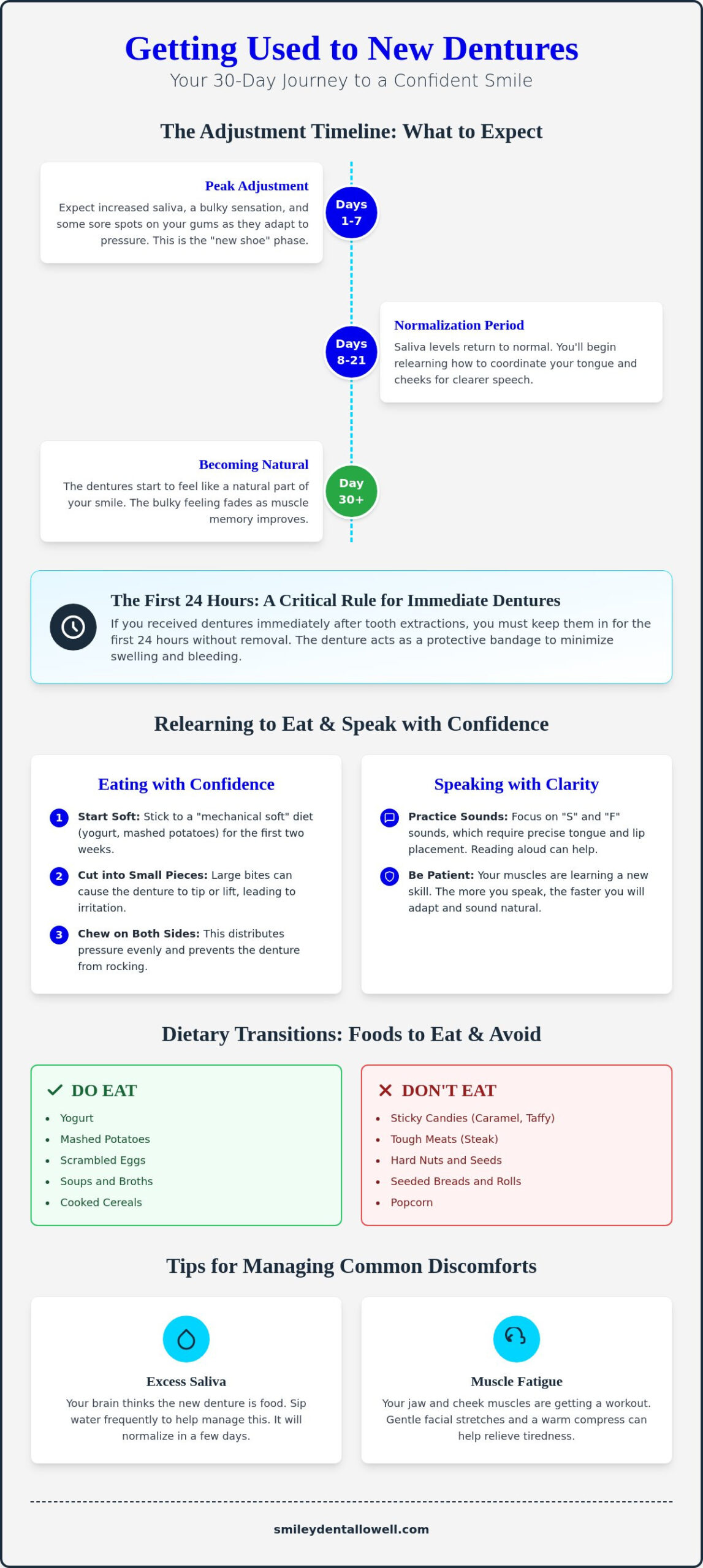
- Days 1-7: This is the peak of the adjustment period. You’ll likely notice more saliva than usual and some tender “sore spots” on your gums as the tissue adapts to the pressure.
- Days 8-21: Your mouth begins to accept the dentures as a permanent fixture. Saliva levels usually normalize, and you’ll start relearning how to coordinate your tongue and cheeks for clearer speech.
- Day 30 and beyond: For most patients, the dentures start feeling like a natural part of their smile. The bulky sensation fades as muscle memory takes over, allowing you to move with more confidence.
The First 24 Hours: Immediate vs. Conventional
If you’ve opted for immediate dentures, which are placed right after tooth extractions, the first 24 hours are unique. You must keep them in your mouth for the entire first day and night without removing them. The denture acts as a protective bandage, compressing the extraction sites to minimize swelling and bleeding. If you take them out too soon, your gums may swell so much that you cannot put the dentures back in. If you’re currently researching missing teeth solutions in Lowell, our team will provide a personalized care plan to help you navigate this critical first night with comfort and ease.
Managing Saliva and Muscle Fatigue
It’s fascinating how the brain works; it often treats new dentures as food, which triggers your salivary glands to work overtime. To manage this, try sipping water throughout the day. This keeps your mouth hydrated and reduces the friction that can lead to irritation. You might also notice that your facial muscles feel tired by the evening. This is simply muscle fatigue from your jaw and cheeks learning to support the new structure. To Learn more about dentures and how they sit within the oral cavity, it’s helpful to realize that your muscles are undergoing a “workout” every time you speak or chew. Gentle facial stretches and warm compresses can help relax these muscles before you head to bed.
Staying consistent with wear is the fastest way to reach the point where you forget you’re wearing them at all. Our team at Smiley Dental is here to support you through every stage of getting used to new dentures Lowell, ensuring your journey to a functional smile is as stress-free as possible.
Relearning to Eat and Speak with Confidence
Regaining your ability to enjoy a meal and chat with friends is often the most rewarding part of the journey. While the initial adjustment focuses on physical sensation, this stage is all about technique. When getting used to new dentures Lowell, your mouth needs a bit of “re-training” to handle the physics of a removable appliance. Since dentures don’t have the same sensory feedback as natural teeth, you’ll rely on muscle memory and balance to keep them stable.
Follow these steps to build your confidence:
- Step 1: Stick to a “mechanical soft” diet for the first two weeks. This includes foods that require very little effort to break down.
- Step 2: Cut your food into tiny, bite-sized pieces. Large bites can cause the denture to tip or lift from the gums, which often leads to irritation.
- Step 3: Chew on both sides of your mouth simultaneously. This distributes pressure evenly across the denture base, preventing it from rocking.
- Step 4: Practice the “S” and “F” sounds. These sounds require precise tongue and lip placement, which can feel different with a new appliance.
Dietary Transitions: From Soups to Solids
During your first week, focus on nutrient-rich, soft options. Yogurt, mashed potatoes, and scrambled eggs are excellent choices that provide energy without straining your jaw. You should avoid sticky candies, tough meats, and seeded breads, as these can dislodge the denture or trap debris underneath. As you feel more comfortable, gradually reintroduce firmer foods like steamed vegetables. The American Dental Association provides helpful context on what to expect with new dentures, noting that your bite strength will slowly improve as your gums heal.
Speech Practice Techniques
If you notice a slight lisp or a clicking sound when you talk, don’t worry. Reading aloud to yourself is a great way to get used to the sound of your own voice. If you feel your dentures slipping mid-sentence, try the “bite and swallow” trick. A quick, gentle bite followed by a swallow resets the suction and stabilizes the appliance. For social outings, using a small amount of adhesive can provide an extra boost of security. If you have questions about which products are right for you, we invite you to consult with our friendly team at Smiley Dental Lowell to ensure your fit is perfect.
Mastering these skills takes practice, but the result is a life without limitations. By staying consistent with these exercises, getting used to new dentures Lowell becomes a smooth transition toward a more functional, beautiful smile.
Managing Discomfort and Identifying Sore Spots
Your gums are soft tissue, and dentures are rigid. This pairing naturally leads to some friction as you’re getting used to new dentures Lowell. While a general feeling of “fullness” is normal, you shouldn’t have to endure sharp, stabbing pain. It’s vital to distinguish between the natural learning curve of your muscles and actual fit issues that require a professional touch. General fatigue in your jaw usually fades as you gain strength, but persistent redness or localized pain often signals a “hot spot” where the denture is rubbing too hard against the ridge.
A warm salt water rinse is a simple, effective home remedy for minor irritation. Dissolve half a teaspoon of salt in a cup of warm water and swish gently for thirty seconds. This helps reduce inflammation and keeps your gum tissue clean. However, if a sore spot doesn’t improve within two or three days, you likely need a minor adjustment. You should never attempt to “DIY” your dentures by filing them down or using sandpaper. Even a microscopic change can ruin the balance of your bite and lead to more severe pain or even a broken appliance. Proper Denture care and maintenance involves recognizing when a problem requires a clinical solution rather than a home fix.
When to Schedule an Adjustment in Lowell
If you notice a specific area of your mouth is consistently raw or bleeding, it’s time to visit us. While getting used to new dentures Lowell, you’ll discover that your comfort levels improve significantly after a professional tweak. We can perform a denture reline, which involves adding new material to the underside of the denture base to better conform to the current shape of your gums. This is a routine part of the process because your jawbone naturally undergoes bone resorption, or shrinking, once natural teeth are removed. A reline restores the snug fit you need for everyday confidence.
The Importance of Regular Checkups
Annual exams are necessary even if you no longer have natural teeth. We use VideaHealth AI diagnostics to monitor your underlying bone health and ensure your dentures aren’t causing hidden issues. These visits allow us to screen for oral cancer and prevent fungal infections like thrush, which can develop under the denture base if it isn’t cleaned or fitted properly. Our goal is to ensure your restorative journey remains a healthy, stress-free experience for years to come.
Denture Maintenance: Protecting Your Investment
Your new smile is a significant investment in your health and quality of life. While getting used to new dentures Lowell involves a biological adjustment for your gums and muscles, maintaining the appliance itself is a daily mechanical task. Proper care ensures your dentures stay comfortable, functional, and aesthetically pleasing for as long as possible. A consistent cleaning ritual prevents the buildup of plaque and tartar, which can lead to gum irritation or bad breath.
Safety is the first step in any cleaning routine. We recommend placing a folded towel in the sink or filling it with a few inches of water before you begin. This simple “towel in the sink” trick provides a soft landing spot if your dentures happen to slip from your hands, preventing accidental breakage on hard porcelain surfaces. When brushing, use a soft-bristled brush specifically designed for dentures. Avoid using standard toothpaste, as many brands contain abrasive ingredients that can create microscopic scratches on the denture surface. These scratches become breeding grounds for bacteria over time.
Temperature and chemistry also matter. You should never use boiling water to clean your dentures, as extreme heat can cause the acrylic to warp, ruining the precise fit we worked so hard to achieve. Similarly, steer clear of household bleach or other harsh chemicals. These can weaken the structure and bleach the pink, gum-colored portions of the appliance. Instead, stick to professional-grade soaking solutions and non-abrasive cleaners.
Overnight Care and Gum Health
Your gums need a break. We recommend removing your dentures for 6 to 8 hours every day, typically while you sleep, to allow your soft tissues to rest and recover from the pressure of wear. Leaving your dentures in 24/7 can lead to inflammation and fungal infections. While they’re out, keep them submerged in a dedicated soaking solution or plain water. This prevents them from drying out, which can lead to brittle materials and warping. Don’t forget to gently brush your tongue and palate with a soft toothbrush to maintain fresh breath and healthy circulation in your gums.
Handling and Storage Tips
If you wear partial dentures, pay special attention to any metal clasps. These can be easily bent or damaged if handled roughly, affecting how the appliance sits in your mouth. Always store your dentures in a sturdy, protective container when you aren’t wearing them, especially during travel. Regularly inspect your appliance for signs of wear, such as micro-cracks or chips. Catching these small issues early prevents them from turning into a major break at an inconvenient time. If you notice any changes in how your teeth feel or look, schedule a checkup at Smiley Dental Lowell so we can ensure everything remains in top condition.
By following these simple steps, you’ll find that getting used to new dentures Lowell becomes a much more rewarding experience. A clean, well-maintained appliance is the key to a healthy, confident smile that lasts for years.
Personalized Support at Smiley Dental Lowell
Restoring your smile is a journey that shouldn’t feel like a burden. While the physical process of getting used to new dentures Lowell takes about 30 days, our professional partnership with you lasts much longer. We believe that a successful adjustment depends on a supportive, family-oriented environment where you feel comfortable asking questions. Our team is dedicated to making dental care stress-free and accessible for every member of the Lowell community. We don’t just provide an appliance; we provide a commitment to your long-term comfort and confidence.
Navigating the logistics of restorative care can be overwhelming, but we’re here to help. Our administrative staff specializes in helping patients maximize their dental insurance benefits to reduce out-of-pocket expenses. We maintain radical transparency regarding all financial aspects, offering adaptable payment structures that ensure high-quality missing teeth solutions in Lowell are within reach. The “Smiley” promise is simple: we aren’t satisfied with your new teeth until you are. If you feel even a minor pinch or slip, we want to see you for a precision adjustment.
AI-Enhanced Care for Better Long-Term Fits
Modern technology has changed the way we approach restorative dentistry. We utilize VideaHealth AI diagnostics to enhance the accuracy of our digital imaging. This advanced system helps us detect early signs of bone loss or changes in jaw density that might affect how your dentures sit over time. By using AI to monitor these subtle shifts, we can often predict fit issues before they become painful sore spots. This proactive approach reduces the number of adjustment appointments you’ll need, saving you time and ensuring a more stable, reliable fit from day one.
Accessible Care for the Lowell Community
Our practice is designed to be a non-judgmental, welcoming space for patients of all ages. We understand that getting used to new dentures Lowell can be an emotional transition, and we’re here to provide the encouragement you need. Our convenient location and flexible scheduling make it easy to drop in for follow-up visits as your mouth changes shape. If you eventually decide you’re ready for an even more permanent solution, our team can discuss the benefits of dental implants in Lowell. Whether you choose traditional dentures or implant-supported restorations, we’re your partner in achieving a smile that looks, feels, and functions naturally.
Step Into Your New Smile with Confidence
The journey to a fully functional smile is a process of small, rewarding victories. Whether you’re mastering tricky speech sounds or enjoying a meal with friends, each day brings you closer to total comfort. It’s helpful to remember that getting used to new dentures Lowell is a partnership between your dedication to practice and our clinical precision. By following a consistent cleaning routine and allowing your gums time to rest each night, you protect both your oral health and your restorative investment.
Our compassionate, family-oriented team is here to support you at every turn. We utilize VideaHealth AI diagnostics to ensure your fit is precise and to monitor your underlying bone health with unmatched accuracy. To provide you with financial peace of mind, we also accept most insurance plans and offer transparent guidance on your coverage. Schedule your denture consultation or adjustment at Smiley Dental Lowell today! We’re ready to help you rediscover the joy of a healthy, beautiful smile that feels like a natural part of you.
Common Questions About Your New Smile
How long does the average person take to get used to new dentures?
Most patients find that it takes approximately 30 days to feel fully comfortable with their new appliance. The first week is usually the most challenging as you manage initial soreness and increased saliva, but by the third week, your speech and chewing abilities will improve significantly. Staying consistent with daily wear is the fastest way to build the muscle memory needed for a natural, confident feel.
Is it normal for my new dentures to cause sores?
Yes, minor sore spots are a standard part of the adjustment period as your gums adapt to the pressure of the rigid appliance. These areas of friction, often called “hot spots,” occur because the soft tissue is learning to support the new structure. If these spots don’t improve after a few days of warm salt water rinses, we invite you to visit us for a professional adjustment to ensure your comfort.
Can I sleep with my dentures in during the first week?
You should generally remove your dentures at night to give your gum tissues a necessary rest. While immediate dentures are worn for the first 24 hours to control swelling, your gums need 6 to 8 hours of “breathing room” every day to stay healthy. This daily break prevents chronic inflammation and long term issues like fungal infections under the denture base. Keeping them in water overnight also prevents warping.
Why do I have so much extra saliva with my new dentures?
Your brain naturally perceives new dentures as food, which triggers your salivary glands to work overtime. This is a temporary biological reaction that typically subsides within the first week or two as your body realizes the appliance is a permanent fixture. Sipping water throughout the day can help thin the saliva and reduce irritation. Swallowing more often will also help your mouth adjust to the new sensation.
How often should I return to Smiley Dental for denture adjustments?
Most patients benefit from one or two minor adjustments during the first month of getting used to new dentures Lowell. After the initial adjustment period, we recommend an annual checkup to monitor the fit and ensure your jawbone health remains stable. If you notice persistent pain, a change in how your bite feels, or visible cracks in the material, you should schedule a visit right away.
Will my dentures affect how food tastes?
You might notice a slight change in how you perceive flavors, especially since an upper denture covers the palate where some taste buds are located. However, most patients find that the change is more about how food feels and its temperature rather than its actual flavor. As you adapt to the new sensation and learn to navigate different textures, your enjoyment of meals will return to normal.
What should I do if my dentures slip when I laugh or cough?
If your dentures shift during a sudden laugh or cough, use the “bite and swallow” trick to quickly reset them. Simply bite down gently and swallow to restore the suction between the denture and your gums. While some movement is normal at first, persistent slipping might mean you need a professional reline or a small amount of adhesive for extra security during social outings.
Are there certain foods I should never eat with dentures?
You should try to avoid extremely sticky candies, very hard nuts, and tough, fibrous meats that require excessive grinding. These foods can trap debris under the appliance or put uneven pressure on the denture base, which might cause it to tip or even break. When getting used to new dentures Lowell, it is best to stick to softer options and cut your food into small pieces until you feel confident.