
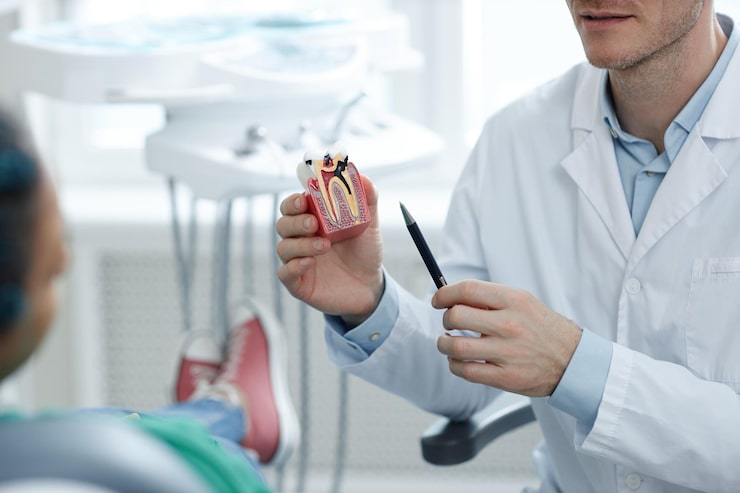
Quick Answer: Most Massachusetts root canals are completed in one to two visits of about 60–120 minutes each, though full treatment — including a follow-up crown — can span two to six weeks. Every timeline differs because of tooth location, infection severity, canal anatomy, and whether a general dentist or endodontist treats you. Common steps include diagnostic imaging, local anesthesia, pulp removal, canal cleaning and sealing, and crown placement. Careful planning at each stage protects the tooth’s long-term success and helps you avoid repeat treatment.
Root Canal Cost in Massachusetts: What You’ll Pay in 2026
If you’re dealing with a toothache and searching for straight answers, here it is: the average root canal cost in Massachusetts in 2026 ranges from about $700 to $1,800 without insurance, and $200 to $700 with dental coverage, depending on which tooth is treated and how complex the infection is. A crown, when needed afterward, typically adds another $800 to $2,000.
This guide covers exactly what drives that price, how Massachusetts costs compare to national averages, what dental insurance and MassHealth actually cover, what happens during each stage of treatment, how long recovery really takes, and five trusted Massachusetts dental clinics you can compare before booking a consultation.
Root Canal Cost in Massachusetts: Quick Answer Box
The table below gives a snapshot of what most Massachusetts patients pay in 2026, broken down by tooth type and insurance status. These figures cover the root canal procedure itself; a crown or filling to restore the tooth afterward is billed separately.
| Tooth Type | Average Cost (No Insurance) | With Insurance (After Coverage) |
| Front Tooth (Incisor/Canine) | $700 – $1,100 | $200 – $350 |
| Premolar | $800 – $1,300 | $250 – $450 |
| Molar | $1,000 – $1,800 | $300 – $700 |
Statewide vs. national average: Massachusetts pricing tracks close to the national range of roughly $700 to $2,000 per tooth. Practices in and around Boston sometimes sit at the higher end because of local overhead, while smaller Massachusetts cities such as Lowell, Fairhaven, and Waltham often offer more moderate pricing without sacrificing the quality of care.
What Affects the Cost of a Root Canal in MA?
Root canal treatment cost is rarely a flat fee. Several factors combine to determine your final price, which is why two patients at the same practice can walk away with very different quotes.
- Tooth location: Front teeth have a single canal and are the least expensive to treat. Molars have two to four canals and require significantly more time and precision, which raises the price.
- Severity and complexity of the infection: A tooth with advanced decay, a large abscess, or curved and calcified canals takes longer to treat and may require additional imaging or medication before the canal work can begin.
- General dentist vs. endodontist: General dentists often charge less for straightforward cases. Endodontists, who specialize in root canal therapy, may charge more but bring advanced equipment and deep experience with complex or previously failed treatments.
- Crown or restoration costs: Most molars and premolars need a crown afterward to prevent the weakened tooth from fracturing. Our guide to dental crowns in Lowell explains what that restoration involves and what it typically adds to the total.
- Geographic location within Massachusetts: Boston-area practices tend to carry higher overhead than offices in smaller cities like Lowell, Fairhaven, Waltham, and Beverly, which can translate into lower out-of-pocket fees for the same procedure.
- Anesthesia or sedation type: Standard local anesthesia is usually included in the base fee. Nitrous oxide or oral sedation for anxious patients may add a modest additional charge — see our guide for anxious patients in Lowell if dental anxiety is a concern for you.
Does Dental Insurance Cover Root Canals in Massachusetts?
Most Massachusetts dental PPO plans classify root canal therapy as a major or basic restorative procedure and cover roughly 50% to 80% of the cost after your deductible is met. Many plans also carry an annual maximum benefit of $1,000 to $2,000, so if you need both a root canal and a crown in the same benefit year, you can reach that cap quickly and owe the remainder yourself. Some plans also apply a 6- to 12-month waiting period for major procedures, which matters if you recently enrolled in a new plan.
MassHealth (Massachusetts Medicaid): MassHealth covers medically necessary root canal treatment for eligible members, though coverage details, prior-authorization requirements, and which providers accept MassHealth vary by plan. Call your dental office directly, or ask during your consultation, to confirm your specific benefit before treatment begins.
Out-of-pocket estimate with a common PPO plan: If your plan covers 80% of a $1,200 molar root canal after a $50 deductible, your out-of-pocket cost would land around $280. If your plan covers only 50%, expect closer to $625 out of pocket. Always ask your dental office for a pre-treatment estimate in writing.
Financing and payment plans: If you’re uninsured or your plan won’t cover enough, many Massachusetts practices offer in-house payment plans or third-party financing such as CareCredit. Our page on dental procedures covered by insurance and our guide for affordable dental care without insurance walk through what to expect and how to plan the cost. You can also review patient resources or check whether your plan, including Cherry, Principal Dental, or Unum, is accepted before your visit.
Root Canal vs. Tooth Extraction: Cost Comparison
When a tooth is badly infected or damaged, patients often ask whether it’s cheaper to simply pull the tooth. A simple extraction usually costs less upfront than a root canal, but the full financial picture looks different once you factor in tooth replacement.
| Factor | Root Canal + Crown | Extraction + Replacement |
| Upfront cost | $1,700 – $3,300 | $150 – $500 (extraction alone) |
| Long-term cost | Usually complete after one restoration | Often $2,000 – $6,000+ for an implant, bridge, or denture later |
| Function | Preserves your natural bite and jawbone | Can shift neighboring teeth and change your bite over time |
| Appearance | Matches your natural smile | Requires a separate restoration to look and feel natural |
Why saving the natural tooth often costs less long-term: A root canal preserves your natural tooth root, which keeps your jawbone stimulated and your bite stable. Extraction alone leaves a gap that typically needs to be filled with an implant, bridge, or denture to prevent shifting teeth and bone loss — and those replacement options usually cost significantly more than finishing root canal treatment. Our comparison of dental implants vs. bridges and our guide on simple tooth extractions in Lowell can help you weigh both paths if you’re still deciding.
Signs You Might Need a Root Canal
Catching an infection early can mean a simpler, less expensive treatment. Watch for these early warning signs:
- Persistent or throbbing tooth pain, especially pain that wakes you up at night
- Sharp sensitivity to hot or cold that lingers well after the stimulus is gone
- Swelling or tenderness in the gums around a specific tooth
- Darkening or discoloration of the tooth compared to its neighbors
- A small pimple-like bump on the gum (a sign of an abscess)
- Pain when chewing or applying pressure to the tooth
- A cracked, chipped, or previously worked-on tooth that has become newly sensitive
If you’re experiencing throbbing pain overnight, our guide to stopping throbbing tooth pain at night explains what’s likely happening and what to do until you’re seen. If you notice a bump on the gum or facial swelling, that can point to a tooth abscess that needs prompt attention — see also our overview of toothache relief and signs of an abscess.
What to Expect During a Root Canal Procedure (Step-by-Step)
Every treatment plan looks a little different because every infection, tooth, and patient is different — but most root canals follow the same core sequence.
Step 1: Diagnosis & X-ray
Your dentist examines the tooth and takes a digital X-ray to see the shape of the roots and how far the infection has spread. This determines whether the tooth can be saved and how complex the treatment will be.
Step 2: Local Anesthesia
The area around the tooth is fully numbed. Most patients feel only pressure, not pain, during the rest of the appointment — a root canal itself is designed to relieve pain, not cause it.
Step 3: Removing Infected Pulp
A small opening is made in the top of the tooth to access the infected or inflamed pulp tissue inside, which is then carefully removed.
Step 4: Cleaning & Shaping the Canal
Each canal is cleaned, disinfected, and shaped using fine instruments to remove bacteria and prepare the space for filling. This step takes longer on molars, which can have three or four canals.
Step 5: Filling & Sealing
The cleaned canals are filled with a biocompatible material and sealed to prevent bacteria from re-entering the tooth.
Step 6: Crown Placement (Follow-Up Visit)
Because a treated tooth can become brittle, most back teeth need a custom crown at a follow-up visit to restore strength and full chewing function. Read our guide on what to eat after getting a dental crown to prepare for this stage of recovery.
Recovery Timeline & Aftercare Tips
Most patients feel mild soreness for two to three days after treatment, which typically responds well to over-the-counter pain relief and resolves as the surrounding tissue heals. Full comfort and permanent crown placement usually complete the process within two to four weeks, though simple front-tooth cases can wrap up faster and complex molar retreatments may take longer.
- Avoid chewing on the treated side until your permanent crown or filling is in place
- Stick to soft foods for the first day or two if the area feels tender
- Take any prescribed antibiotics for the full course, even if pain improves early
- Keep up gentle brushing and flossing around the area to support healing
- Contact your dentist if pain worsens, or if swelling develops — this can signal a complication that needs attention
Top 5 Dental Clinics for Root Canals in Massachusetts (2026)
If you’re comparing where to go for treatment, here are five Massachusetts practices worth considering, each serving a different part of the state.
1. Smiley Dental Lowell
Location: Lowell, MA
Highlights: A full-service family and restorative practice offering root canal therapy alongside AI-assisted diagnostics, same-day emergency visits, and multilingual care in English, Spanish, and Haitian Creole. The practice emphasizes transparent, upfront pricing and flexible financing so patients understand costs before treatment begins.
Website: https://smileydentallowell.com/
2. Smiley Dental Beverly
Location: Beverly, MA
Highlights: Serving the North Shore, this location offers root canal and restorative care with a comfort-focused approach for patients managing dental anxiety, plus flexible scheduling for working families.
Website: https://smileydentalbeverly.com/
3. Smiley Dental Boston – Dentist in Roslindale
Location: Roslindale, Boston, MA
Highlights: A conveniently located Boston-area practice providing root canal therapy, crowns, and general dentistry for city residents who want quality endodontic care without traveling far from home.
Website: https://www.smileydentalboston.com/
4. Smiley Dental Waltham
Location: Waltham, MA
Highlights: Located west of Boston, this office combines modern technology with a patient-first approach to root canal treatment, making it a convenient option for MetroWest patients.
Website: https://smileydentalwaltham.com/
5. Smiley Dental Fairhaven
Location: Fairhaven, MA
Highlights: Serving the South Coast region, this practice offers root canal therapy and restorative dentistry with a focus on gentle, judgment-free care for patients returning to the dentist after time away.
Website: https://smileydentalfairhaven.com/
Comparing the Five Locations
| Clinic | Region | Typical Price Range | Same-Day Availability |
| Smiley Dental Lowell | Greater Lowell | $700 – $1,800 | Yes |
| Smiley Dental Beverly | North Shore | $700 – $1,800 | Yes |
| Smiley Dental Boston (Roslindale) | Greater Boston | $800 – $2,000 | Yes |
| Smiley Dental Waltham | MetroWest | $700 – $1,800 | Yes |
| Smiley Dental Fairhaven | South Coast | $700 – $1,800 | Yes |
Pricing shown is a general guide, not a quote. Your exact cost depends on your tooth, the complexity of your case, and your insurance — confirmed in writing after an in-person exam.
How to Choose the Right Endodontist/Dentist in Massachusetts
Cost matters, but it shouldn’t be the only factor in your decision. Use this checklist when comparing providers:
- Credentials & experience: Ask how many root canals the dentist performs each month and whether complex cases are referred to an endodontist.
- Technology used: 3D imaging and modern rotary instruments can improve accuracy and shorten appointment times. Our page on AI-powered dental diagnostics explains how this technology is used in practice.
- Reviews & reputation: Look for consistent, detailed patient feedback about pain management, communication, and follow-up care.
- Insurance & payment flexibility: Confirm the practice accepts your plan and offers financing if you’re paying out of pocket.
- Emergency availability: Infections don’t wait for business hours. Ask whether the practice offers same-day or emergency appointments for severe pain or swelling.
Tips to Save Money on Root Canal Treatment in MA
- Compare quotes from two or three clinics before committing, especially for molar treatment where prices vary the most
- Ask about in-house or third-party payment plans, which can spread the cost over several months interest-free
- Check local dental school clinics, which sometimes offer reduced-fee treatment performed under faculty supervision
- Use HSA or FSA funds, which let you pay with pre-tax dollars and reduce your effective cost
- Verify insurance pre-authorization before treatment so you know your exact coverage and avoid surprise bills
- Address symptoms early — see our guide on what to do for a severe toothache so a minor issue doesn’t turn into a more expensive emergency
| Quick Tip: Don’t Delay Treatment • Waiting on a suspected infection rarely saves money — it usually increases it, since untreated infections can spread and sometimes require extraction and replacement instead of a root canal. • If you’re in pain right now, review Smiley Dental Lowell’s checklist on dental emergencies before your appointment so you know what to do while you wait to be seen. |
Frequently Asked Questions
Without insurance, expect to pay roughly $700 to $1,100 for a front tooth, $800 to $1,300 for a premolar, and $1,000 to $1,800 for a molar. If a crown is needed afterward, the all-in cost typically lands between $1,700 and $3,300.
Most patients rate the procedure itself around a 2 to 3 out of 10 because the area is fully numbed with local anesthesia — you’ll feel pressure, not sharp pain. The days before treatment, when the infection is untreated, are often far more painful than the appointment itself. Mild soreness for a day or two afterward is normal and manageable with over-the-counter pain relievers.
A straightforward front-tooth or premolar root canal often takes 45 to 60 minutes. Molars, which have more canals, typically take 60 to 120 minutes and sometimes require two appointments. Your dentist will give you a specific estimate after examining your X-ray.
MassHealth can cover medically necessary root canal treatment for eligible members, though coverage specifics and prior-authorization requirements vary by plan and provider. Confirm your exact benefit with your dental office before scheduling treatment.
Most patients return to work or normal activities the same day or the next, since local anesthesia wears off within a few hours. Strenuous exercise is often best avoided for 24 to 48 hours, and most residual soreness resolves within two to three days. Full healing around the tooth continues quietly over the following weeks even after you’ve resumed your normal routine.
A root canal treats the infection inside the tooth and typically costs $700 to $1,800 depending on the tooth. A crown is a separate restoration placed over the tooth afterward to protect it from fracturing, and generally costs $800 to $2,000 on its own. Together, the combined cost to fully restore a back tooth is usually $1,700 to $3,300.
Look for a Massachusetts practice that explicitly offers same-day emergency appointments, such as Smiley Dental Lowell’s emergency dental services, and call ahead to describe your symptoms so the front desk can prioritize your visit.
Both procedures are performed under local anesthesia, so pain during either appointment is minimal. Many patients report that recovery after an extraction feels somewhat more uncomfortable in the first day or two, because a socket is left behind to heal, whereas a root canal leaves the tooth structure intact. Neither should feel more painful than the infection that led you to the dentist in the first place.
Yes. A crown protects the visible part of a tooth, but decay can still develop at the margin where the crown meets the natural tooth, or underneath if bacteria find a way in. This is why regular checkups and good home care remain important even after a tooth has been crowned. If you notice new sensitivity or discomfort around a crowned tooth, it’s worth having it checked promptly.
Early signs include lingering sensitivity to hot or cold, a dull ache that comes and goes, mild tenderness when chewing, or slight discoloration of a single tooth. These symptoms can be easy to dismiss at first, but catching them early often means simpler, less expensive treatment than waiting until pain becomes severe or swelling develops.
Most patients say the anticipation beforehand is worse than the procedure itself. Once numb, the appointment mainly involves pressure and the sound of dental instruments rather than pain. The most common physical complaint afterward is jaw soreness from holding your mouth open, which typically fades within a day or two.
Root canal treatment has a strong long-term success rate, and many treated teeth function normally for a decade or more — especially when a crown was placed promptly, and the patient kept up routine checkups. Some teeth can eventually need retreatment if a new crack, decay, or infection develops, which is why continued checkups matter even after treatment feels finished.
People Also Search For
Patients researching this topic often also look into the following related cost questions, all covered above:
- Root canal cost with insurance
- Root canal cost without insurance
- Root canal and crown cost without insurance
- How much does a molar root canal cost with insurance
- Average cost of root canal and crown
- Root canal and crown cost with insurance
- How much is a root canal with Medicaid
- Delta Dental root canal cost
Conclusion: Getting an Affordable, Effective Root Canal in Massachusetts
In 2026, most Massachusetts patients can expect to pay between $700 and $1,800 for a root canal, with insured patients often paying $200 to $700 out of pocket. While the price can feel daunting up front, root canal treatment remains one of the most cost-effective ways to save a natural tooth compared to extraction and replacement down the road.
The right clinic — one that offers transparent pricing, modern technology, and flexible payment options — can make the process far less stressful. If you’re experiencing tooth pain or suspect you may need a root canal, book a consultation with Smiley Dental Lowell or explore our detailed page on root canal treatment in Lowell — or reach out to one of the four sister locations in Beverly, Boston, Waltham, or Fairhaven — to get a written estimate and take the next step toward lasting relief.
To learn more about the full range of care available, visit our services page, read more on the Smiley Difference, or browse our full dental blog for more patient guides like this one.