Imagine sitting down for a family dinner at your favorite local restaurant, only to have a single bite of food send a lightning bolt of agony through your jaw. Dealing with sharp pain when biting down Lowell MA residents often experience can turn a simple meal into a source of constant anxiety. It’s completely normal to feel frustrated when you can’t enjoy your favorite foods, or to feel a bit of “dental dread” about what a hidden problem might cost. You deserve answers that are honest, easy to understand, and won’t break your budget.
We believe that high-quality care should be supportive and stress-free for everyone in our community. In this guide, you’ll discover exactly why your tooth hurts under pressure and how our advanced VideaHealth AI diagnostics provide a precise, visual map of your dental health. We’ll also walk through our gentle treatment options and the flexible ways we make emergency care affordable. From clear cost transparency to modern tools, we’re here to ensure you can get back to smiling and eating comfortably without any financial surprises.
Key Takeaways
- Learn why sudden pressure or the “rebound” effect causes discomfort and how to identify common triggers like Cracked Tooth Syndrome.
- Understand when to seek emergency dental care for sharp pain when biting down Lowell MA to prevent minor structural damage from becoming a lost tooth.
- See how VideaHealth AI diagnostics help our team catch nearly invisible fractures and deep decay with incredible precision.
- Explore restorative solutions like porcelain crowns and composite fillings designed to restore your physical comfort and your smile.
- Discover how our focus on cost transparency and flexible payment options ensures your emergency care is both fast and financially accessible.
Understanding Why It Hurts When You Bite Down
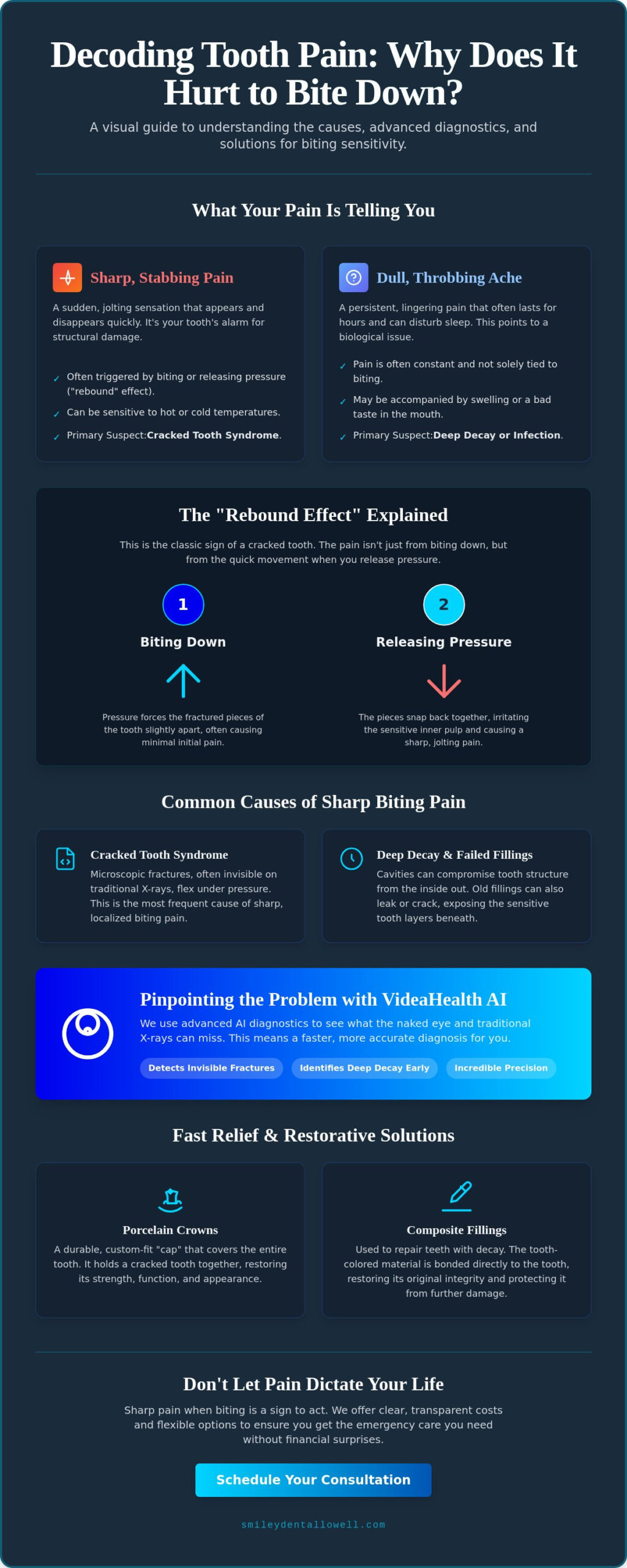
When you experience a sudden, jolting sensation while eating, it’s more than just an annoyance. It’s your body’s built-in alarm system trying to protect a vital part of your health. This specific type of sharp pain when biting down Lowell MA neighbors often describe is usually a direct response to mechanical pressure on the tooth’s internal structure. Unlike a constant ache, this pain is triggered by the act of chewing, which tells us that the physical integrity of the tooth might be compromised. It’s a common symptom, but it’s one that requires prompt attention to prevent a small issue from becoming a larger, more expensive problem.
One of the most confusing aspects of this discomfort is what dentists call the “rebound” effect. You might notice that the pain doesn’t just happen when you clench your teeth together, but actually feels sharper the moment you let go. This happens because the pressure of biting pushes the sections of a compromised tooth apart. When you release that pressure, those sections snap back together quickly, irritating the sensitive nerves inside the pulp. This cycle of flexing and snapping is a clear signal that the tooth’s protective outer layers aren’t doing their job effectively.
Sharp vs. Dull Pain: What Your Tooth Is Saying
The personality of your pain provides essential clues for a proper diagnosis. A sharp, stabbing sensation that disappears as quickly as it arrived is a hallmark sign of structural damage, such as Cracked Tooth Syndrome. In these cases, the tooth’s enamel has a microscopic fracture that opens and closes under the force of your bite. If you also feel a “zing” when drinking cold water or hot coffee, it’s a strong indicator that the crack has reached the deeper, more sensitive layers of the dentin.
In contrast, a dull, throbbing ache that lingers for hours often suggests a different story. These persistent aches usually point toward an infection or deep decay that has reached the pulp. While sharp pain is about structure, dull pain is often about biology and inflammation. Understanding this difference helps our team determine whether you need a simple restorative fix or more intensive care to save the tooth.
The Anatomy of Biting Pressure
Your teeth are remarkably sophisticated. They don’t just sit in your jaw; they’re suspended by a flexible tissue called the periodontal ligament. This ligament acts as a shock absorber. When you bite down, the tooth moves slightly within its socket. If a tooth is healthy, this movement is painless. However, if the tooth is compromised by a deep cavity or a fracture, the tooth structure actually flexes under the weight of your jaw muscles. This flexing puts direct pressure on the pulp, which is the “living” center of the tooth filled with nerves and blood vessels.
As you monitor your symptoms, try to pay attention to exactly where the sensation starts. Does it happen on one specific tooth, or does it feel like it’s coming from an entire side of your mouth? Noting these details helps us pinpoint the problem quickly during your exam. We’re here to listen to your concerns and provide a clear, honest path toward getting you back to pain-free meals.
Common Causes of Sharp Biting Pain in Lowell Patients
Identifying the root cause of your discomfort is the first step toward reclaiming your favorite meals and your peace of mind. While we’ve already discussed the mechanical sensations of biting pressure, understanding the “why” behind the pain helps demystify the experience and reduces the anxiety of the unknown. For many people struggling with sharp pain when biting down Lowell MA area, the issue is often a hidden structural flaw that isn’t immediately visible in a mirror. We want you to know that these symptoms are very common, and there’s always a clear, professional path to relief once we pinpoint the source.
Cracked Tooth Syndrome and Hidden Fractures
This condition is the most frequent reason for that sudden, lightning-bolt sensation. These tiny fractures are notoriously difficult to detect because they often don’t show up on traditional 2D X-rays. When you bite, the crack flexes open; when you release, it snaps shut. This movement irritates the internal pulp and creates that signature jolt of discomfort. Habits like chewing on ice, biting hard candies, or nighttime teeth grinding are often the primary culprits behind these fractures. Reviewing the symptoms and diagnosis of a cracked tooth can help you understand how these nearly invisible lines impact your daily comfort and tooth stability.
Deep Decay and Failed Restorations
Sometimes the problem lies beneath the surface of older dental work. Over time, even high-quality composite fillings can leak or develop microscopic gaps around the edges. Bacteria can sneak into these spaces, softening the tooth structure from the inside out. You might find that pain only occurs when food is wedged into a specific spot, creating a localized pressure point that the weakened tooth can no longer support. It’s a frustrating situation, but catching these issues early prevents them from turning into more complex and expensive emergencies later on.
Beyond cracks and decay, your bite alignment plays a major role in your physical comfort. If a new crown or filling is even a fraction of a millimeter too “high,” it hits before your other teeth do. This interference, known as malocclusion, bruises the ligament surrounding the tooth and causes acute distress with every chew. Additionally, a dental abscess at the root tip can create pressure that feels like a sharp jab when you push the tooth into its socket. If you’re tired of the guesswork, our team can provide a clear, honest answer during a comprehensive dental exam designed to put your mind at ease.
Is Your Biting Pain a Dental Emergency?
If you’re wondering whether that sharp pain when biting down Lowell MA residents often worry about requires an immediate visit, you aren’t alone. Deciding when a symptom crosses the line from a minor nuisance to a true emergency can be stressful. However, when you’re dealing with structural issues like cracks or fractures, “waiting it out” is rarely a safe strategy. Unlike a soft tissue injury that might heal on its own, a compromised tooth will only continue to weaken under the constant pressure of daily chewing. Taking action quickly is the best way to ensure a small crack doesn’t turn into a much larger problem.
Ignoring these warning signs puts the entire tooth at risk. A small fracture that causes a sharp jolt today can easily turn into a complete split tomorrow. If the crack extends below the gum line or deep into the root, the tooth may become impossible to save. Seeking emergency dental care in Lowell at the first sign of biting pain is the most effective way to protect your natural smile and avoid more complex procedures like extractions later on. We’re here to provide a fast, honest assessment that prioritizes both your comfort and your long term health.
Urgent Red Flags You Should Not Ignore
While any sudden pain is worth a call to our office, certain symptoms demand immediate attention. If you notice facial swelling, a persistent fever, or a constant bad taste in your mouth, these are signs that an infection may be spreading. A small, pimple like bump on your gum, known as a fistula, is another major red flag indicating a serious dental abscess. If the pain is severe enough to prevent you from sleeping or focusing on your daily tasks, please reach out right away. These symptoms suggest that the issue has moved beyond a simple structural crack and into a potentially dangerous infection that needs professional care.
Home Care vs. Professional Intervention
It’s tempting to reach for over the counter pain relievers or “temporary filling” kits from the pharmacy. While these might offer a few hours of relief, they only mask the symptoms without addressing the underlying cause. In fact, using a temporary kit on a cracked tooth can sometimes trap bacteria inside or put even more pressure on the fracture, making the situation worse. A professional diagnosis is the only reliable way to identify exactly what’s happening beneath the surface. We use modern tools to ensure your treatment is fast and effective, giving you the lasting relief that home remedies simply can’t provide.
Pinpointing the Pain: Advanced AI Diagnostics in Lowell
Solving the mystery of sharp pain when biting down Lowell MA neighbors experience requires more than just a quick look with a mirror. Since fractures and early decay often hide deep within the tooth structure, we’ve integrated VideaHealth AI diagnostics into our daily care. This technology acts as a powerful second set of eyes, analyzing your images with clinical precision to ensure nothing is missed. It’s about giving you total peace of mind that your diagnosis is accurate, honest, and based on the most advanced data available today. We believe you deserve to see exactly what’s happening in your mouth without any guesswork.
To make this process as comfortable as possible, we utilize modern digital X-rays. Unlike the bulky, uncomfortable film used in the past, these sensors are small and capture high resolution images instantly. When these digital images are paired with our AI software, we can detect structural compromises that the human eye might overlook. This “second opinion” is built into every exam, helping us confirm our findings and explain your treatment options with complete transparency.
The VideaHealth Advantage for Lowell Residents
Our VideaHealth system analyzes thousands of data points from every image to highlight potential issues in their earliest stages. By catching a microscopic crack or a small area of decay now, we can offer more conservative and less expensive treatments. It’s much easier and more affordable to place a small filling today than it is to wait for a tooth to split and require a crown later. Best of all, we show you these AI results on a large screen right at your chairside. You’ll see the same highlights and data that our team sees, making you a fully informed partner in your own dental health journey.
Our Precision Diagnostic Process
We follow a steady, logical path to find the source of your biting pain and provide fast relief. Our three step process ensures we understand the full story before we suggest a solution:
- Step 1: Visual and Tactile Exam: We carefully check for visible wear patterns, enamel cracks, or signs of nighttime grinding that might be stressing your teeth.
- Step 2: Bite Testing: We use specialized tools to isolate the exact tooth and even the specific cusp that triggers your pain. This helps us confirm if the issue is a fracture or a bite alignment problem.
- Step 3: AI Powered Digital Imaging: We perform a deep structure analysis using AI to look for “hidden” decay under old fillings or fractures that extend toward the root.
If you’re tired of wondering why your tooth hurts every time you eat, experience the precision of an AI-powered dental exam today. We’re here to provide the clear answers you need to move forward with confidence.
Fast Relief and Restorative Solutions at Smiley Dental Lowell
Once we’ve identified the source of your discomfort using our advanced diagnostic tools, our focus shifts entirely to your physical comfort and long term recovery. We understand that the thought of dental work can cause anxiety, especially when you’re already dealing with the stress of a sharp pain when biting down Lowell MA residents often face. That’s why we’ve designed our practice to be a warm, welcoming environment where clinical expertise meets neighborly care. As your primary dentist in Lowell, MA, we’re committed to providing a gentle experience that prioritizes your needs and your schedule.
Our treatment philosophy is rooted in conservative care. We always aim to save as much of your natural tooth structure as possible. Whether your pain requires a minor adjustment to your bite or a more durable restorative solution, we explain every step of the process before we begin. You’ll never feel rushed or pressured into a decision. Instead, we provide the clear, honest information you need to choose the path that’s right for your health and your budget.
Saving Your Tooth: Crowns, Fillings, and Root Canals
The solution for biting pain depends on the depth and cause of the structural issue. For minor decay or small chips, we often use composite fillings that bond directly to your enamel, restoring the tooth’s strength and appearance. If a crack is more significant, porcelain crowns act as a protective “helmet” for your tooth. By encasing the compromised structure, a crown prevents the crack from spreading and stops the painful flexing that occurs when you chew.
In cases where the internal pulp has become inflamed or infected, root canal therapy is the most effective way to stop the pain and save the tooth from extraction. Modern techniques have made this procedure much more comfortable than most people expect. Our team uses a gentle touch and supportive approach to ensure you feel at ease throughout the entire visit.
Stress-Free Care: Insurance and Payment Options
We believe that financial concerns should never be a barrier to emergency care. In compliance with the Patients First Act, we provide radical transparency regarding the costs of your procedures in advance. We accept most dental insurance plans in Lowell, including those managed by DentaQuest. If you’re a MassHealth member aged 21 or older, we can help you navigate the 2026 coverage limits to maximize your benefits. For our neighbors without insurance, we offer adaptable payment structures to ensure you get the urgent assistance you need without added stress.
Don’t chew through the pain. Schedule your emergency exam today and let us help you get back to enjoying your favorite meals with confidence and comfort.
Reclaim Your Smile and Your Comfort Today
Living with the sharp pain when biting down Lowell MA residents often face doesn’t have to be your daily reality. We’ve looked at how modern tools like VideaHealth AI diagnostics provide 2x more accurate detection of hidden fractures, allowing for faster and more conservative treatments. By choosing to address these warning signs early, you protect your natural teeth and avoid the stress of more complex procedures later on. Our team is here to guide you through every step with warmth and clinical expertise.
We believe that everyone deserves easy access to high quality care. That’s why we accept most insurance plans and offer emergency appointments to fit your needs. From our transparent pricing to our gentle restorative solutions, we prioritize your physical comfort and your financial peace of mind. You don’t have to navigate dental discomfort alone; we’re ready to help you get back to enjoying your favorite foods without a second thought.
Get Fast Relief—Schedule Your Emergency Exam in Lowell Now
Frequently Asked Questions
Why does my tooth hurt only when I release my bite?
This sensation is known as the “rebound” effect, and it’s a classic indicator of a cracked tooth. When you clench your teeth, the pressure forces the segments of a fractured tooth apart; when you let go, those segments snap back together and irritate the nerves inside the pulp. This mechanical flexing is why the pain often feels sharper during the release than during the initial clench.
Can a cracked tooth heal on its own if I stop chewing on that side?
No, a cracked tooth cannot heal itself because dental enamel does not have the ability to mend fractures or regenerate. While avoiding that side of your mouth might temporarily reduce your discomfort, the crack will continue to exist and will likely expand under the normal stresses of speaking and swallowing. Seeking professional care early is the only way to stabilize the structure and prevent the fracture from reaching the root.
Is sharp biting pain always a sign that I need a root canal?
Not necessarily, as the recommended treatment depends entirely on whether the internal pulp has been damaged or infected. If the sharp pain is caught early, a simple bite adjustment or a porcelain crown might be enough to protect the tooth and stop the discomfort. However, if a crack or deep cavity has allowed bacteria to reach the living center of your tooth, root canal therapy becomes the most effective option to remove the infection.
How much does it cost to fix a tooth that hurts when biting in Lowell?
The cost of treatment varies based on the specific diagnosis and the type of restoration required to provide lasting relief. A minor bite adjustment or a composite filling will have a different price point than a more complex procedure like a porcelain crown or root canal therapy. We provide clear, upfront cost estimates before any work begins, ensuring you understand your specific insurance coverage and any out of pocket responsibilities in advance.
Will a new dental filling fix my biting sensitivity?
A new composite filling can resolve sensitivity if the pain was originally caused by a cavity or a leaking old restoration. By sealing the tooth and protecting the sensitive dentin layers, the filling stops external triggers from reaching the nerves. However, if the sensitivity is caused by a structural crack rather than decay, a filling may not be enough; a crown might be recommended to provide the full coverage and support needed.
What should I do if I have a sharp pain when biting but no visible cavity?
You should schedule a professional exam immediately because many structural issues, like microscopic fractures, are completely invisible to the naked eye. If you’re experiencing sharp pain when biting down Lowell MA residents should know that our VideaHealth AI diagnostics can see deep into the tooth structure to find what a visual check might miss. Ignoring the pain just because you don’t see a hole can lead to a sudden, complete tooth split.
How soon can I get an appointment at Smiley Dental Lowell for tooth pain?
We prioritize patients experiencing acute discomfort and offer emergency dental appointments to provide you with the fastest possible relief. Our goal is to see you as quickly as possible to diagnose the problem and stabilize your tooth before the condition worsens. You can call our office directly to find the next available opening, as we keep space in our daily schedule specifically for urgent situations that require immediate attention.
Can sinus pressure cause my upper teeth to hurt when I bite down?
Yes, sinus pressure can often mimic dental pain because the roots of your upper teeth sit very close to your maxillary sinuses. When these sinuses are inflamed or congested, they can put pressure on the tooth roots, making them feel tender when you chew or clench. We can perform a quick exam and use digital imaging to determine if the source of your discomfort is a dental issue or a result of seasonal sinus changes.