Did you know that nearly 178 million Americans are currently missing at least one tooth? While a simple tooth extraction is a routine procedure, the journey to a healthy smile really depends on what happens during those first few days at home. It’s completely natural to feel a bit nervous about the healing process. You might be worried about the sharp pain of a dry socket, or perhaps you’re just feeling stuck on what foods are safe to eat while you recover.
We understand those concerns, and we’re here to help you navigate this transition with total confidence. This guide provides everything you need to know about simple tooth extraction aftercare to ensure your recovery is as fast and comfortable as possible. We’ll cover the essential steps for protecting the extraction site, managing minor discomfort, and knowing exactly when your mouth is ready to return to normal. By following these supportive tips, you can focus on healing and get back to enjoying your favorite meals in no time. Our goal is to make professional care feel accessible and stress-free for your entire family.
Key Takeaways
- Learn why protecting the initial blood clot is the most important step in your simple tooth extraction aftercare and which common habits to avoid for the first 24 hours.
- Discover the “20/20 ice pack rule” to effectively manage swelling, which typically peaks around the second day of recovery.
- Find out how to transition safely from liquids to soft solids while staying hydrated without the use of straws or suction.
- Identify the specific warning signs of dry socket and learn why the third to fifth days are the most critical window for your healing.
- Understand what to expect at the two-week milestone as your mouth returns to normal and your smile begins its long-term restoration in Lowell.
The First 24 Hours: Protecting Your Healing Foundation
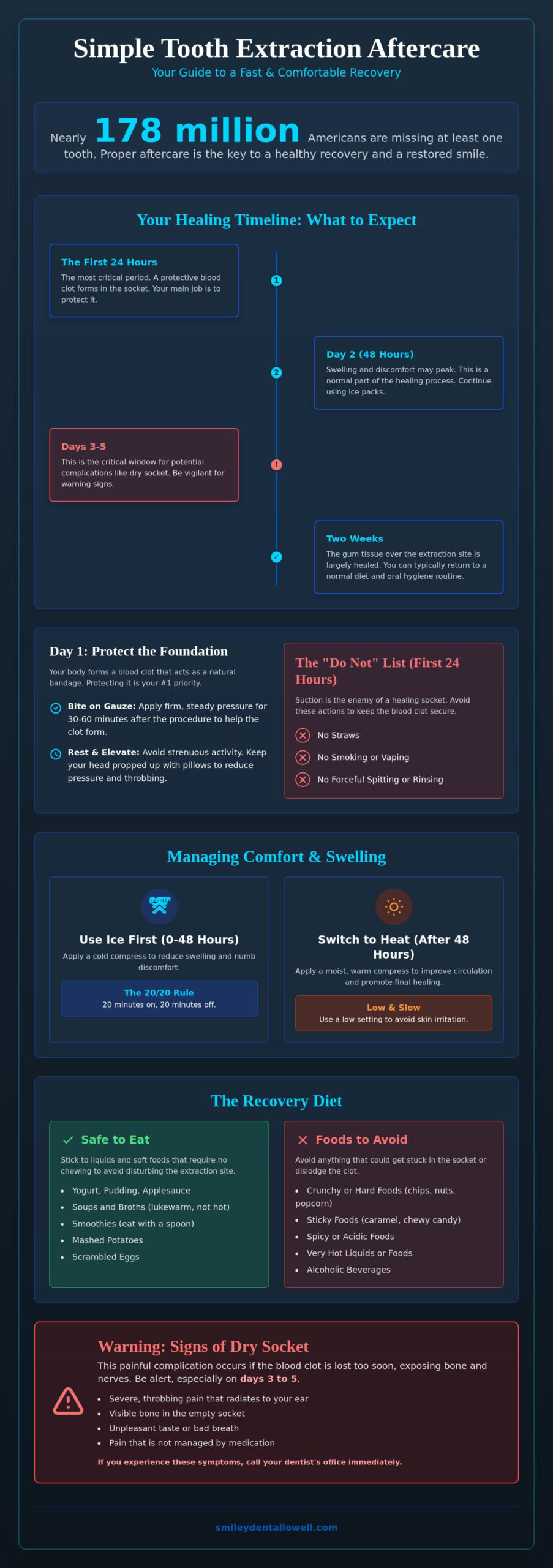
The first 24 hours following your procedure are the most critical window for a successful recovery. During this time, your body works quickly to form a blood clot in the empty socket. You should think of this clot as a natural bandage. It’s a vital seal that protects the underlying bone and sensitive nerve endings while the new gum tissue begins to grow. If this foundation is disturbed or lost, it can lead to significant discomfort and slower healing. Understanding the basics of what is a tooth extraction helps you appreciate why this initial clotting phase is so essential for your long-term oral health.
When you leave our office, you’ll likely have a piece of gauze placed over the site. Keep firm, steady pressure on it for at least 30 to 60 minutes to encourage the clot to form. If you need to change the gauze, dampen the new pad slightly with lukewarm water first. This prevents the dry fibers from sticking to the fresh clot and accidentally pulling it away when you remove the pad. Proper simple tooth extraction aftercare starts with this gentle approach to the surgical site.
Rest is just as important as physical protection. We recommend taking the day off from strenuous activities and keeping your head elevated. When you lie down, prop yourself up with two or three pillows. Keeping your head above your heart reduces the blood pressure in your jaw. This simple step helps minimize throbbing and keeps initial bleeding under control so you can rest more comfortably.
The “Do Not” List for Day One
To keep that healing foundation secure, you must avoid certain habits for at least 24 hours. Skip the straws, don’t smoke, and avoid spitting forcefully. Suction is the primary enemy of a healing socket during this stage. Suction creates a vacuum in the mouth that can physically pull the delicate blood clot right out of the socket. Stick to gentle movements and let any liquids roll out of your mouth naturally rather than rinsing or swishing vigorously.
Managing Initial Bleeding
It’s very common to notice some pink or red-tinged saliva for the first day. This “oozing” is normal and often looks like more than it actually is because it mixes with your saliva. However, if you experience active, bright red bleeding that doesn’t slow down with firm pressure, you can try the tea bag trick. Moisten a standard black tea bag and bite down on it firmly for 20 minutes. The natural tannins in the tea help constrict blood vessels and encourage clotting. If the bleeding remains heavy after trying this, please call our Lowell office immediately so we can provide the support you need. We want to ensure your simple tooth extraction aftercare stays on the right track for a smooth, worry-free recovery.
Managing Comfort and Reducing Swelling at Home
Recovery doesn’t have to be a chore. Setting up a “Recovery Station” before you head to your appointment is a great way to stay relaxed. Stock it with extra pillows to keep your head propped up, a water bottle, and your favorite soft books or movies. This proactive approach to simple tooth extraction aftercare makes the first few days feel much more manageable and stress-free for your whole family.
Many people are surprised to find that swelling often looks more pronounced on the second day than the first. This is a normal part of the body’s inflammatory response. The peak usually occurs around 48 hours after the procedure. By following American Dental Association recovery tips, you can stay ahead of this process and minimize facial puffiness effectively.
To keep swelling at bay, use the 20/20 ice pack rule. Apply a cold compress to the outside of your cheek for 20 minutes, then remove it for 20 minutes. Repeat this cycle as often as possible during the first 24 hours. This rhythmic cooling constricts blood vessels and significantly reduces the inflammatory fluid that causes discomfort in the jaw area.
Ice vs. Heat: When to Switch
Cold therapy is your best friend for the first 48 hours because it restricts blood flow to the surgical site. However, once you pass that two-day mark, it’s time to switch to moist heat. A warm washcloth or heating pad on a low setting helps improve circulation. This increased blood flow flushes out old fluids and speeds up the final stages of tissue repair. Just be sure to wrap your heat or ice source in a thin towel to protect your skin from irritation.
Medication Safety Tips
Managing discomfort is easiest when you stay ahead of it. We often suggest taking your first dose of over-the-counter pain medication before the local anesthesia completely wears off. This creates a seamless transition as the numbness fades. Always follow the specific dosage recommended by our team. One critical safety rule: never place an aspirin tablet directly on the extraction site. Aspirin is acidic and can cause a chemical burn on your delicate gum tissue. If you were prescribed antibiotics, finish the entire course even if you feel perfectly fine.
If you ever feel uncertain about your progress or have questions about your healing, our team at Smiley Dental in Lowell is always ready to provide the guidance you need for a fast, pain-free recovery.
The Recovery Diet: What to Eat and How to Clean
Once the initial 24 hours have passed, your focus shifts from strictly protecting the clot to maintaining your nutrition and keeping your mouth clean. Proper simple tooth extraction aftercare involves a gradual transition back to your normal routine. You don’t have to worry about going hungry; you just need to choose the right textures and temperatures to keep your mouth comfortable.
Hydration is your priority during these first few days. Stick to lukewarm water or electrolyte drinks to keep your energy levels up. Remember, even if you feel thirsty, you must drink directly from a cup. Avoid straws entirely. As we mentioned previously, suction can easily dislodge the healing tissue, so keep it simple and sip gently. Lukewarm liquids are best because extreme heat can dissolve the clot, while extreme cold might cause sensitivity in the surrounding teeth.
A 3-Day Soft Food Plan
Planning your meals ahead of time takes the guesswork out of recovery. Here is a simple roadmap for the first 72 hours:
- Day 1: Stick to room temperature broths, Greek yogurt, and protein shakes. Use a spoon rather than drinking from a bottle to avoid any unintentional suction.
- Day 2: You can introduce thicker textures like creamy mashed potatoes, soft scrambled eggs, and lukewarm oatmeal. These provide necessary nutrients and protein without requiring much chewing.
- Day 3: Start incorporating soft solids like flaky white fish, well-cooked pasta, and ripe avocados. These are easy on your jaw but feel more like a satisfying, normal meal.
Safe Oral Hygiene Habits
Maintaining a clean mouth is essential for preventing infection, but you have to be gentle. You can resume brushing your other teeth on the second day, but stay away from the extraction site entirely for about a week. Use a soft-bristled brush and take your time to ensure you don’t accidentally bump the tender area. This careful approach is a hallmark of successful simple tooth extraction aftercare.
The saltwater rinse is the gold standard for oral disinfection during your recovery. Mix about half a teaspoon of salt into a cup of warm water. Start these rinses 24 hours after your procedure to keep the area clean. Instead of swishing and spitting, use the “gravity rinse” technique. Gently tilt your head from side to side to let the water move over the socket, then lean over the sink and let the water fall out of your mouth naturally. This keeps the area clean without the risk of disturbing the healing foundation.
Recognizing and Preventing Complications like Dry Socket
Understanding the risks is a key part of successful simple tooth extraction aftercare. While most people heal without any issues, you should be aware of a condition called dry socket, or alveolar osteitis. This happens when the blood clot we mentioned earlier, your natural bandage, dissolves or dislodges before the wound has a chance to heal. When this occurs, the underlying bone and sensitive nerves are exposed to air, food, and fluids. It’s not a common occurrence, but knowing the signs helps you act quickly if something doesn’t feel right.
Timing is everything when it comes to monitoring your progress. Most complications don’t show up right away. You are actually at the highest risk between day three and day five of your recovery. If you feel fine on day two but suddenly experience a sharp increase in discomfort on day four, it’s a clear signal that the healing process has been interrupted. Smokers face a significantly higher risk of these delays. The chemicals in tobacco can slow blood flow to the gums, while the physical act of inhaling can pull the clot loose from its foundation.
It’s also important to distinguish between normal healing and a potential infection. While some swelling and soreness are expected, a persistent fever, a foul taste in your mouth, or an unpleasant breath odor are signs that you might need professional attention. Keeping a close eye on these details ensures your simple tooth extraction aftercare remains on a positive path and leads to a quick return to your normal routine.
Symptoms of Dry Socket
- Pain that radiates from the extraction site toward your ear, eye, or temple on the same side of your face.
- A “hollow” look in the socket where you can see whitish bone instead of a dark, healthy blood clot.
- A sudden, throbbing pain that over-the-counter medications can’t seem to manage effectively.
When to Call Smiley Dental Lowell
If you experience any of these symptoms, you don’t have to suffer through the pain. Our team is here to help as your trusted emergency dentist Lowell. We treat dry socket by gently cleaning the area and applying a medicated dressing that provides almost instant relief. Most complications are easily treatable if caught early. If your recovery feels like it’s taking a step backward, please reach out to contact our team for a check-up so we can get you back to feeling your best.
Long-Term Healing and Restoring Your Smile in Lowell
Reaching the two-week mark is a major milestone in your recovery journey. By this point, the initial tenderness has usually faded, and you can return to your favorite crunchy snacks and standard brushing routines. However, your simple tooth extraction aftercare doesn’t truly end when the gums close. Underneath the surface, your jawbone begins a natural process of remodeling. Without the tooth root to stimulate the bone, the area can start to thin over time. This is why we focus on what happens after the site has healed as much as the procedure itself.
Your teeth work as a team to stay in place. When a gap is left open, neighboring teeth might start to tilt or lean into the empty space. You might also face “super-eruption,” where the tooth directly opposite the gap begins to move out of its socket because it no longer has a surface to bite against. These shifts can eventually lead to bite misalignment or even jaw discomfort. Our goal is to prevent these issues before they start, ensuring your smile stays healthy and functional for years to come.
Restoration Options for Missing Teeth
Planning for a replacement early is the best way to protect your long-term oral health and jaw structure. We offer several solutions to keep your smile beautiful and complete. For many of our neighbors, dental implants Lowell MA are the most natural-feeling choice. Implants act like a replacement tooth root, which keeps your jawbone strong and prevents the bone loss that often follows an extraction. If you need a quicker result, fixed dental bridges are a fantastic way to close the gap by using the healthy teeth on either side as anchors. Both options are designed to blend seamlessly with your natural teeth and restore your chewing power.
Your Follow-Up Visit
We typically schedule a quick post-operative checkup to ensure your gums and bone are healing exactly as they should. During this visit, we use VideaHealth AI diagnostics alongside our digital X-rays to get an incredibly detailed look at your progress. This advanced technology helps us verify that the bone is dense and healthy, providing a clear path forward for any future restorations. We view a simple extraction as the first step toward a healthier version of you. Whether you’re interested in a single replacement or a full smile makeover, our team provides the supportive, professional care you deserve to feel confident again.
Ready to complete your smile? Schedule a consultation for missing teeth solutions and let’s discuss the best path for your health.
Take the Next Step Toward Your Healthy Smile
Your journey to a pain-free recovery is all about those small, consistent steps you take at home. By protecting your healing foundation in the first 24 hours and staying ahead of the 48-hour swelling peak, you’ve already done the most important work. Remember that successful simple tooth extraction aftercare is the bridge between your procedure and a complete, functional smile. Whether you’re transitioning back to your favorite foods or simply monitoring your progress, your comfort and peace of mind remain our top priority.
At Smiley Dental, we’ve provided warm, family-oriented care to our Lowell community for over 20 years. We combine this neighborly touch with modern VideaHealth AI diagnostics to ensure every step of your healing is precise and stress-free. We also accept most insurance plans to keep professional care accessible for every member of your family. If you have questions about your recovery or are ready to explore permanent restoration options, we’re here to support you.
Contact Smiley Dental Lowell for Expert Extraction Care. We look forward to seeing your healthy smile again soon!
Common Questions About Extraction Recovery
How long does pain last after a simple tooth extraction?
Discomfort typically lasts for about 24 to 72 hours following your procedure. Most patients find that any soreness peaks around the second day and then gradually tapers off as the tissue begins to settle. You can manage this transition easily with over-the-counter relievers as recommended by our team. If you notice pain suddenly getting worse after the third day, please reach out to us. This ensures your simple tooth extraction aftercare is progressing exactly as it should.
Can I eat immediately after my tooth extraction?
You should wait until the local anesthesia has completely worn off before eating any solid foods. This precaution prevents you from accidentally biting your tongue or the inside of your cheek while your mouth is still numb. Once the feeling returns, stick to soft, room-temperature options like yogurt, pudding, or applesauce. Avoid hot liquids or spicy seasonings for the first 24 hours, as these can irritate the fresh site and cause unnecessary discomfort during the initial healing phase.
What should I do if my extraction site starts bleeding again?
Minor oozing is normal for the first day, but if active bleeding returns, bite firmly on a clean piece of damp gauze for 45 minutes. Ensure you are applying steady, constant pressure without opening your mouth to check the site too frequently. If the bleeding persists after this, a moistened black tea bag can help because the natural tannins encourage blood vessels to constrict. Contact our Lowell office if the bleeding remains heavy after two attempts with gauze so we can provide further guidance.
Is it normal to have a white or yellow film in the extraction socket?
Yes, seeing a white or yellowish film is often a normal part of the healing process called granulation tissue. This material acts as a protective framework for new skin and bone to grow over the empty socket. It is quite different from the yellowish discharge associated with an infection, which is usually accompanied by a foul taste or persistent throbbing. If you feel fine and don’t have a fever, this film is simply a sign that your body is working hard to heal.
How soon can I go back to work or school after an extraction?
Most patients return to their normal school or work routines the very next day. Since a simple extraction is less invasive than a complex surgery, the recovery time is relatively quick for most healthy adults. However, you should avoid heavy lifting or intense physical exercise for at least 48 hours. These activities increase your heart rate and blood pressure, which can cause the extraction site to start throbbing or lead to renewed bleeding that interrupts your rest.
When can I start using a straw or smoking again?
You should wait at least 72 hours before using a straw or smoking. The suction created by these actions is the most common cause of a dislodged blood clot, which can lead to a painful dry socket. For the best results, many dental professionals recommend waiting a full week to ensure the socket is well-protected by new, sturdy tissue. This patience is a vital part of effective simple tooth extraction aftercare and helps you avoid preventable complications.
What happens if I accidentally dislodge the blood clot?
If the blood clot is dislodged, you may experience a dull, throbbing pain that radiates from the socket toward your ear or temple. This condition stops the natural healing process and leaves the underlying bone exposed to the air. Don’t panic if this happens; it’s a common issue that we can fix quickly in our office. Call us right away so we can apply a medicated dressing to soothe the nerves and jumpstart the healing process for you.
How do I know if I have an infection in the extraction site?
Signs of a potential infection include a persistent fever, pus draining from the socket, or facial swelling that continues to get worse after the third day. You might also notice an unpleasant taste or breath odor that doesn’t go away with gentle saltwater rinses. While some minor redness and swelling are expected, these specific symptoms suggest your body needs a little extra professional help. We can provide a quick exam and any necessary prescriptions to resolve the issue promptly.