
| Quick Answer
Most fillings placed today are tooth-colored composite, shade-matched to your natural enamel so they blend in. Silver amalgam, ceramic, and gold remain options in certain situations. A composite filling is usually completed in a single visit, with shade selection taking a few minutes at the start of the appointment. You can eat once any numbness wears off, so there is no recovery period. |
Filling color matters more than most people expect. A well-matched composite on a front tooth is essentially invisible, while a poor match draws the eye every time you smile. Getting it right comes down to material choice, a proper shade-matching process, and one piece of timing that many patients never hear about.
This guide covers what determines filling color, the material options and how they compare, how dentists actually match shades, and how to keep your filling looking right over time. If you are considering tooth-colored fillings in Lowell, start here.
What Determines Dental Filling Color?
Your Natural Tooth Shade
No two people share the same tooth color, and your own teeth are not a single uniform shade either. Natural teeth are polychromatic. The area near the gumline is usually more saturated, the middle carries the main body color, and the biting edge is often more translucent and slightly greyer. A skilled match accounts for all three zones rather than picking one shade for the whole tooth.
The Material Used
Composite comes in a wide range of shades and opacities. Ceramic can be layered for very natural results. Amalgam is silver-grey with no shade options at all, and gold is gold. Material choice therefore sets the ceiling on how natural a filling can look.
Lighting
Color perception shifts under different light, which is why a shade that looks perfect in a dental office can seem slightly off in daylight. Dentists address this by using natural north-facing daylight where possible, or a color-corrected operatory light at around 5500 Kelvin, which approximates daylight.
Types of Dental Fillings and Their Color Options
Composite (Tooth-Colored) Fillings
The most common choice today. Composite resin is shade-matched to your enamel and bonds directly to the tooth, which often allows a more conservative preparation. It suits front teeth and any visible area, and modern materials work well on back teeth too. Our 2026 guide to composite restorations covers the material in more depth.
Amalgam (Silver) Fillings
Dental amalgam is an alloy of mercury with silver, tin, and copper, giving it the familiar metallic appearance. It is durable, tolerant of moisture during placement, and generally less expensive. Some patients still choose it for back teeth where appearance matters less and chewing forces are highest. Its limitation is purely cosmetic, since it never blends with natural tooth structure.
Ceramic and Porcelain
Ceramic inlays and onlays are the most natural-looking option and resist staining better than composite over time. They are typically fabricated rather than placed directly, which means higher cost and sometimes a second visit, so they are usually reserved for larger restorations.
Gold
Uncommon today but still used occasionally. Gold is exceptionally durable and gentle on opposing teeth, and some patients specifically prefer it. Obviously it makes no attempt to look like a tooth.
| Material | Color | Best For | Main Trade-Off |
| Composite | Shade-matched to your teeth | Visible areas, small to moderate cavities | May stain at margins over years |
| Amalgam | Silver-grey, clearly visible | Back teeth, heavy chewing areas | No cosmetic blending |
| Ceramic | Very natural, stain-resistant | Larger restorations, visible teeth | Higher cost, often two visits |
| Gold | Gold, clearly visible | Back teeth, durability priority | Appearance and cost |
For a fuller comparison of the two most common options, see our guides on metal versus tooth-colored fillings and which filling type is right for you.
How Dentists Match Your Filling Shade
The Shade Guide
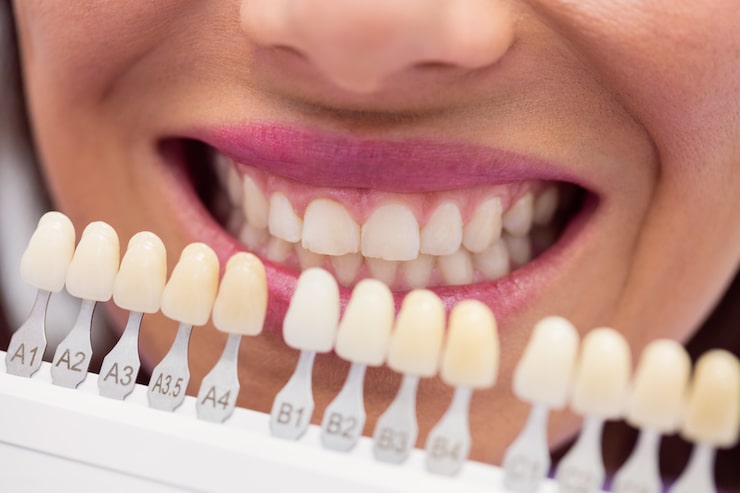
Most dentists use a VITA shade guide, the international standard since 1956. The classical version contains 16 tabs organized by hue: the A group is reddish-brown, B is reddish-yellow, C is greyish, and D is reddish-grey. The number beside each letter indicates intensity, so A1 is the lightest in its family and A4 the most saturated.
The newer VITA 3D-Master system uses 26 shades and works differently, selecting lightness first, then intensity, then hue, because lightness is the dimension our eyes notice most. There are also dedicated bleached shades lighter than A1, which exist because so many patients now have professionally whitened teeth brighter than the traditional guide’s lightest tab.
Digital Shade Matching
Some practices use digital devices such as spectrophotometers that read tooth color electronically and remove some of the subjectivity from visual matching. These tools are useful, particularly for difficult front-tooth cases, though a trained eye still matters for judging translucency and surface texture.
Why the Room Matters
Shade should ideally be assessed in natural daylight or under color-corrected lighting, with you sitting upright rather than reclined. Bright lipstick really does distort color perception, so it is worth removing before your appointment if you are having a visible filling matched.
The Timing Detail That Changes EverythingShade should be selected at the very start of your appointment, before any treatment begins. Once a tooth is isolated with suction or a rubber dam, the enamel begins to dehydrate within about five to ten minutes, and dehydrated enamel looks noticeably lighter than it truly is. Matching at that point produces a filling that appears too light once your tooth rehydrates over the following hours. The rule among dentists is simple: shade first, prepare second. If your dentist reaches for the shade guide before starting, that is a good sign. |
Choosing the Right Filling Color for Your Situation
Front Teeth vs Back Teeth
Front teeth demand careful shade matching, since any discrepancy is visible whenever you talk or smile. Back teeth give more latitude. Some patients choose composite throughout for consistency, while others accept amalgam or gold on molars where nobody sees them and durability matters most.
Children vs Adults
Children’s teeth are generally lighter and more opaque than adult teeth, so shades differ. For baby molars with extensive decay, a stainless steel crown is sometimes recommended instead of a filling, which is a durability decision rather than a cosmetic one. Composite is commonly used for children when clinically appropriate.
If You Have Crowns or Veneers Nearby
This complicates matters, because existing restorations have a fixed color that will not change. A new filling next to a crown should be matched to the crown as well as the natural tooth, and if the crown has darkened with age, matching it exactly may not give the result you want. Discuss this openly during planning.
If You Are Considering Whitening
Whiten first, then match. Composite does not lighten with whitening treatments, so a filling matched to unwhitened teeth will look conspicuously dark once the surrounding enamel brightens. Wait for your shade to settle after whitening, usually a week or two, then have visible fillings matched to the new color. Doing it the other way around often means replacing the filling.
Do Filling Colors Change Over Time?
Composite can pick up staining over the years, particularly at the margins where the filling meets the tooth. Coffee, tea, red wine, cola, and tobacco are the usual causes, and the effect is gradual rather than sudden.
Your natural teeth also change color with age, generally darkening slightly as enamel thins. A filling that matched perfectly a decade ago may no longer match for that reason alone, even if the composite itself has not stained.
To maintain the original shade, brush twice daily, clean between your teeth, rinse with water after strongly colored drinks, avoid tobacco, and keep up with routine cleanings, which remove surface stain from both teeth and restorations. Replacement or touch-up is worth considering when a visible filling has darkened noticeably, when the margins have discolored, or when the filling has worn, chipped, or begun to leak.
Are Tooth-Colored Fillings Safe?
Yes, based on current evidence. Composite resin has been used for decades and is considered safe and effective for restoring teeth. It contains no mercury, which is a common reason patients prefer it.
On the related question of amalgam safety, the FDA considers dental amalgam safe for the general population including adults and children over six, while recommending that certain groups avoid new amalgam where appropriate alternatives exist. Importantly, the FDA does not recommend removing existing amalgam fillings that are in good condition, since removal temporarily increases mercury vapor exposure and sacrifices healthy tooth structure. If you are considering replacement for cosmetic reasons, that is a reasonable personal choice, and our guide to replacing metal fillings covers what that involves.
Cost Differences Between Filling Materials
Composite generally costs more than amalgam, largely because placement is more technique-sensitive and takes longer. The tooth must stay completely dry during bonding, and the material is applied and cured in layers. Ceramic costs more still, since it involves fabrication and often a second visit.
Beyond material, cost depends on the size of the cavity and how many tooth surfaces are involved, since fillings are typically priced by surface count. One insurance quirk is worth knowing: some plans reimburse composite fillings on back teeth only at the amalgam rate, leaving you responsible for the difference. Ask your office to verify benefits before treatment. Our tooth-colored filling cost guide goes into more detail, and patients with MassHealth coverage can ask how their benefits apply.
Getting the Best Shade Match: A Patient Checklist
A few simple steps make a real difference to your result:
| ✓ Complete any teeth whitening before having visible fillings placed
✓ Remove bright lipstick before your appointment ✓ Ask your dentist to select the shade before treatment begins ✓ Mention any nearby crowns or veneers that need matching ✓ Ask to see the shade tab against your tooth in natural light ✓ Say if you have had a filling look wrong before, and how ✓ Ask what to avoid in the first 48 hours to limit early staining ✓ Keep up routine cleanings to remove surface stain |
Tooth-Colored Fillings at Smiley Dental Lowell
Our office at 1141 Bridge Street serves Lowell, Dracut, Chelmsford, Tewksbury, and Billerica. Shade selection is part of the appointment rather than an afterthought, and we take it before treatment begins so dehydration does not distort the match.
- Shade assessed before preparation, the way it should be done.
- Consideration of nearby restorations and whitening plans during matching.
- Clear explanation of material options for your specific tooth.
- Costs and insurance discussed before treatment starts.
You can meet our dental team or take a tour of our office before your first visit.
Frequently Asked Questions
What color are most dental fillings today?
Most fillings placed today are tooth-colored composite, shade-matched to blend with your natural enamel. Silver amalgam is still used in some cases, particularly on back teeth, and ceramic and gold remain options for specific situations.
Can I choose the color of my filling?
To a degree. You choose the material, and with composite your dentist selects a shade matched to your natural teeth rather than offering a color menu. The goal is for the filling to disappear, so matching your existing shade is what produces the best result.
What color should a tooth filling be?
For visible teeth, it should match your surrounding enamel closely enough that you cannot pick it out. For back teeth, appearance matters less and durability may take priority. A well-matched composite is essentially invisible, which is the point.
Do white fillings stain?
They can over time, especially at the margins where filling meets tooth. Coffee, tea, red wine, and tobacco accelerate it. Composite also does not respond to whitening treatments, so a stained filling generally needs polishing or replacement rather than bleaching.
Are tooth-colored fillings more expensive than silver ones?
Generally yes. Composite placement is more technique-sensitive and takes longer, since the tooth must stay dry and the material is layered and cured. Some insurance plans also reimburse composite on back teeth only at the amalgam rate, leaving a balance to pay.
How long do composite fillings keep their color?
Many hold their shade well for years, though gradual marginal staining is common. Longevity depends on your diet, tobacco use, oral hygiene, and where the filling sits. Your natural teeth also darken slightly with age, which can affect the match independently.
Can old silver fillings be replaced with tooth-colored ones?
Yes, and many patients do so for cosmetic reasons. Note that the FDA does not recommend removing intact amalgam fillings purely out of health concern, since removal sacrifices healthy tooth structure. Replacement is appropriate when a filling is failing, or as an informed cosmetic choice.
Can you get a tooth-colored filling on any tooth?
Composite works on both front and back teeth in most situations. Very large cavities or teeth that have lost significant structure may be better served by a crown or ceramic restoration, since a filling of any material has limits when little healthy tooth remains.
Why does my new filling look lighter than my tooth?
Often because the shade was matched after the tooth had dehydrated during treatment, making it appear lighter than its true color. As the tooth rehydrates over hours or days, the mismatch becomes visible. This is why shade should be selected before treatment begins.
The Bottom Line
Filling color comes down to three things: the material you choose, how carefully the shade is matched, and when in the appointment that matching happens. Composite offers shade-matched results that blend with natural enamel, amalgam and gold prioritize durability over appearance, and ceramic sits at the natural-looking end for larger restorations. Your natural teeth are not one uniform color, so a good match accounts for that.
Two practical points make the biggest difference for patients: whiten before matching visible fillings, since composite will not lighten later, and make sure the shade is taken before treatment begins rather than after your tooth has dried out. To discuss filling options for your teeth, schedule an appointment online with Smiley Dental Lowell or call 978-999-9000.
Book a filling shade consultationSmiley Dental Lowell | 1141 Bridge Street, Lowell, MA | 978-999-9000 Serving Lowell, Dracut, Chelmsford, Tewksbury, and the Merrimack Valley. We will explain your material options and match your shade properly before any treatment begins. |