| Quick Answer
Implant placement is performed under local anesthesia, so you should feel pressure rather than pain during the procedure itself. Mild to moderate soreness for a few days afterward is typical and usually managed with over-the-counter or prescribed medication. Placement takes roughly one to two hours per implant, while full treatment spans three to nine months because bone needs time to fuse with the implant. |
Will it hurt is the question patients ask most before implant treatment, and it deserves a straight answer rather than reassurance.
Most patients report mild to moderate discomfort afterward rather than severe pain, and many say the placement itself was easier than the extraction that preceded it. That said, swelling and soreness are real, and pretending otherwise helps nobody. Here is what to expect at each stage.
- What the procedure actually feels like and why you should not feel pain during it.
- A realistic day-by-day timeline of discomfort and recovery.
- Why some patients feel more than others.
- When pain is not normal and warrants a call.
Is Dental Implant Surgery Painful? The Short Answer
No, not during the procedure. Implant surgery is performed under local anesthesia, with sedation available at many practices, so you should feel pressure but not pain. Mild to moderate soreness is common for a few days afterward and is usually managed with medication.
- During surgery: pressure, vibration, and movement, but not sharp pain.
- First 48 hours: the most noticeable soreness and swelling, peaking around day two or three.
- Week one and beyond: steady improvement, with most patients comfortable by the end of the week.
What Does Implant Surgery Actually Feel Like?
Step by Step
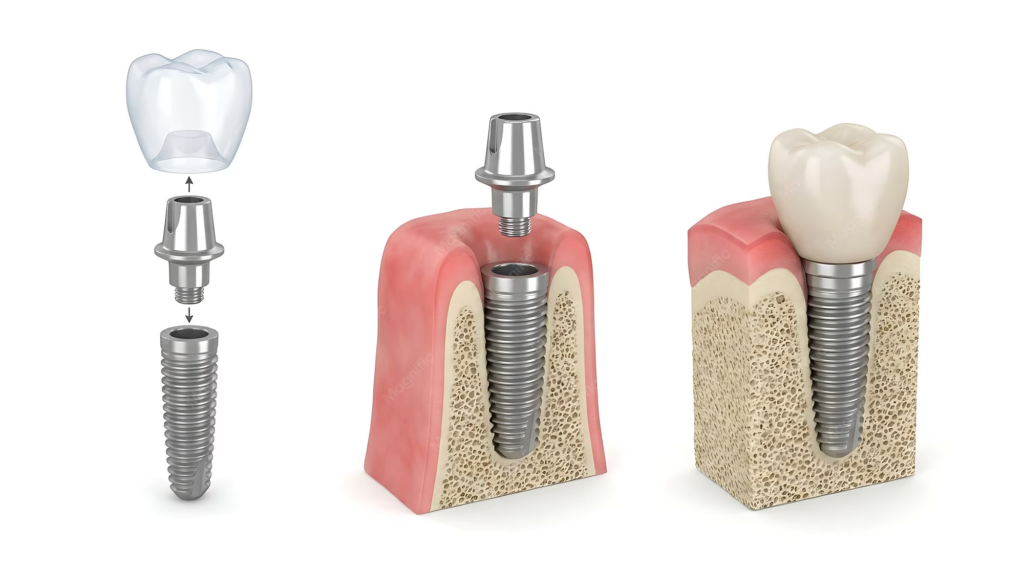
Consultation and 3D imaging come first, mapping bone volume, nerve position, and sinus location so placement can be planned precisely. On the day, anesthesia is administered and given time to take full effect. A small incision is made in the gum, the bone is prepared to receive the implant, the titanium post is placed, and the site is closed with sutures or fitted with a healing cap.
Why You Should Not Feel Pain
Local anesthesia blocks pain signals from the area completely. What it does not block is pressure, and that distinction confuses people. You will feel pushing, vibration, and movement, because bone is being worked on. Those sensations can feel strange, but they are not pain. If you feel anything sharp, say so immediately, since more anesthetic can be given.
Sedation options exist at many practices for patients with dental anxiety, ranging from nitrous oxide to oral or intravenous sedation. Ask what a specific office offers when you book, since availability varies.
How Long Does It Take?
Placement typically takes about one to two hours per implant, depending on complexity and whether extractions or grafting happen at the same visit. The full treatment timeline runs longer, generally three to nine months, because the implant must fuse with bone before the final tooth is attached. Our surgical dental implants guide for Lowell covers each stage in detail.
Dental Implant Pain Timeline: What to Expect
A realistic view of how discomfort progresses:
| Stage | Expected Sensation | Typical Management |
| During surgery | Pressure and vibration, no sharp pain | Local anesthesia, sedation if used |
| Hours 1 to 4 | Numbness wearing off | Take medication before numbness fades |
| Days 1 to 3 | Soreness, swelling, minor bruising | Ice packs, pain relief as directed |
| Days 4 to 7 | Gradual improvement | Soft foods, gentle hygiene |
| Week 2 onward | Little to no discomfort | Follow-up visit |
| Months 3 to 6 | Osseointegration, no symptoms | Routine checkups |
One practical tip from that table deserves emphasis: take your first dose of pain medication before the numbness completely wears off. Getting ahead of discomfort is far more effective than chasing it once it has started. Timelines vary with the number of implants placed, whether grafting was done, and individual healing.
Why Some Patients Feel More Discomfort Than Others
The range between patients is wide, and several factors explain it:
- Number of implants placed in one appointment.
- Whether bone grafting or a sinus lift was needed, which adds to recovery.
- Whether a tooth was extracted at the same visit.
- Individual pain tolerance and anxiety, since anxiety does amplify perceived discomfort.
- Smoking, diabetes, or other conditions that slow healing.
- Surgical technique, including whether digital planning and guided placement were used.
Smoking deserves particular mention. It impairs blood flow to healing tissue, increases infection risk, and raises the chance of implant failure. If you smoke, the period around surgery is worth pausing for. Our surgical implant candidacy and recovery guide covers the factors that affect outcomes.
Is Implant Surgery More Painful Than an Extraction or Root Canal?
Many patients report implant placement feels easier than the extraction that preceded it, which surprises people who expect the opposite.
The reason is mechanical. An extraction involves loosening and removing a tooth from its socket, which requires considerable force and often leaves a larger wound. Implant placement is a controlled, planned procedure into prepared bone. Root canal treatment is usually comparable to a long filling appointment, with discomfort more related to the infection that prompted it than the treatment itself. Wisdom tooth removal, particularly of impacted teeth, tends to involve the most swelling and jaw stiffness of these procedures. Our comparison of simple and surgical extractions explains why removal difficulty varies so much.
Being honest about it: swelling and soreness after implant placement are normal and expected. Severe pain is not. The distinction matters, and the next section covers where that line sits.
| Reducing Discomfort After Implant Surgery
Take pain medication as directed, ideally before the numbness fades completely. Apply ice packs to the outside of your cheek for the first 24 to 48 hours, roughly 20 minutes on and 20 minutes off. Choose soft, cool foods and avoid straws, hot drinks, and anything hard or crunchy. Keep your head elevated when resting, which reduces throbbing. Begin gentle salt water rinses after the first 24 hours if your dentist advises it, without vigorous swishing. Avoid smoking and alcohol entirely during early healing, and keep every follow-up appointment. |
When Is Pain Not Normal?
Discomfort should improve steadily after the first two or three days. These signs warrant a call:
✓ Severe pain after day three to five that worsens rather than improving
✓ Persistent or increasing swelling, fever, or pus
✓ Bleeding that will not stop with gentle pressure
✓ A loose implant, or a bad taste or odor
✓ Numbness lasting well beyond the expected period
Pain that increases rather than settles is the clearest signal something needs attention. Call Smiley Dental Lowell at 978-999-9000 right away rather than waiting to see if it improves. For difficulty breathing or swallowing, rapidly spreading swelling, or uncontrolled bleeding, seek emergency medical care immediately, and our same-day emergency dental care is available for urgent dental problems.
How Much Does a Dental Implant Cost in Massachusetts?
A complete single implant in Massachusetts, including the post, abutment, and crown, generally runs about $3,000 to $6,000. Bone grafting, extractions, imaging, and sedation are typically quoted separately.
General Massachusetts market ranges from 2026 cost data, not Smiley Dental fees. Your cost is quoted after an examination and imaging.
When comparing quotes, ask whether the figure includes the abutment and crown or only the implant post, since that single difference explains most dramatic price gaps. Ask for everything itemized in writing.
Which Country Is Cheapest for Dental Implants?
Destinations commonly cited for lower implant pricing include Mexico, Costa Rica, Colombia, Hungary, and Turkey, where treatment can cost substantially less than in the United States.
Weigh the practical realities before deciding. Implant treatment is not a single visit, since fusion with bone takes months and the final restoration comes later, meaning either multiple trips or a compressed schedule. Follow-up care and complication management are difficult at distance, and a local dentist may be reluctant to take on another provider’s work months later. Standards and materials vary between countries and between clinics within them, and travel costs reduce the apparent saving. None of this makes treatment abroad automatically a poor decision, but the comparison should include these factors rather than price alone.
What Is the Newest Procedure for Dental Implants?
Several developments have changed implant treatment in recent years, though newer does not automatically mean better for your case.
Digitally guided surgery uses 3D imaging and a custom surgical guide so implants are placed exactly where they were planned, which improves accuracy and can reduce surgical time. Immediate loading allows temporary teeth to be fitted at placement for suitable patients, so nobody leaves without teeth. Full-arch approaches using a smaller number of angled implants can avoid grafting in some cases. For patients with severe upper jaw bone loss, specialized longer implants anchoring into denser bone are an option in selected situations.
What matters more than any technique is whether it suits your anatomy. A well-executed conventional placement outperforms a poorly planned advanced one, and your dentist should explain why they recommend a particular approach for you.
Which Brand Is Best for Dental Implants?
There is no single best brand. Several established manufacturers have decades of clinical research behind their systems, and outcomes depend far more on planning, surgical technique, and your own healing than on which brand is used.
One practical consideration is worth raising with your dentist, though. Widely used, established systems make future repairs and component replacement considerably easier. If a crown or abutment needs replacing in fifteen years, parts for a common system will be available, while an obscure or discontinued one may leave you with limited options. Ask which system your dentist uses and why, and whether components will be straightforward to source later.
Implant Care at Smiley Dental Lowell
Our office at 1141 Bridge Street, Lowell, MA, phone 978-999-9000, serves Lowell along with Dracut, Chelmsford, Tewksbury, and Billerica. We are open weekdays and Saturday mornings.
If anxiety about discomfort is part of what is holding you back, say so when you call. Knowing in advance lets the team allow more time, explain each step as it happens, and discuss what comfort options are available for your situation. Many patients find that understanding what they will feel, and what they will not, removes most of the worry.
An implant consultation includes an examination, 3D imaging where clinically appropriate, and a discussion of what treatment would involve, in what order, and at what cost. You can find directions and current hours on our Google Business Profile, and our guide on what to expect before, during, and after surgical teeth removal is useful if extraction comes first.
Frequently Asked Questions
Does getting a dental implant hurt?
Not during the procedure. Local anesthesia numbs the area completely, so you feel pressure and movement rather than pain. Afterward, mild to moderate soreness for a few days is typical and usually manageable with recommended medication. Tell your dentist immediately if you feel anything sharp during treatment.
How long does pain last after implant surgery?
Most discomfort peaks around day two or three, then improves steadily. Many patients feel comfortable within a week. Swelling follows a similar pattern. If pain worsens after day three to five rather than improving, contact your dentist, since that pattern is not typical of normal healing.
Is implant surgery done under general anesthesia?
Usually not. Most placements are performed under local anesthesia in the dental chair. Sedation options including nitrous oxide, oral sedation, or intravenous sedation are available at many practices for anxious patients or complex cases. General anesthesia is reserved for specific situations. Ask what your office offers.
Can I go to work the next day?
Many patients return to desk work the following day, particularly after a single implant. Physical jobs and strenuous activity should wait longer, since raised blood pressure can disturb the healing site. If you had sedation, you should not drive or work that same day. Plan for a quiet first 48 hours.
What is the most painful part of getting dental implants?
There is no universal answer. Some patients find the days after surgery hardest, others the anticipation beforehand, and others the temporary diet or overall treatment length. If bone grafting or extraction happens at the same visit, recovery is usually more noticeable than from implant placement alone.
Are bone grafts painful?
Grafting typically adds some soreness and swelling compared with implant placement alone, and recovery takes longer. It is performed under anesthesia, so the procedure itself should not hurt. Discomfort is usually manageable with recommended medication. The graft then needs several months to integrate before implants can be placed.
How much does a dental implant cost in Lowell?
A complete single implant in Massachusetts, including post, abutment, and crown, generally runs about $3,000 to $6,000, with grafting, extractions, imaging, and sedation quoted separately. Your cost depends on your case, so ask for an itemized written estimate after an examination and 3D imaging.
Is it normal to have pain two weeks after an implant?
Significant pain at two weeks is not typical and should be evaluated. Mild tenderness can linger, particularly after grafting or multiple implants, but discomfort should be clearly improving by then. Pain that persists, worsens, or comes with swelling, a bad taste, or a loose feeling needs prompt attention.
Does anxiety make implant surgery feel worse?
It can. Anxiety heightens perceived discomfort and makes the experience feel longer. Telling your dental team beforehand allows them to allow extra time, explain each step as it happens, and discuss sedation options. Many patients find that knowing what to expect removes most of the apprehension.
The Bottom Line
Implant placement is performed under anesthesia, so the procedure itself should not be painful. You will feel pressure and movement, which is normal and not the same thing. Afterward, expect mild to moderate soreness peaking around day two or three and improving steadily from there, with most patients comfortable within a week. Severe pain, or pain that worsens after day three to five, is not part of normal healing and deserves a call.
For most patients, the reality is considerably less difficult than the anticipation. If concerns about discomfort have been holding you back, a consultation costs you nothing but time and gives you accurate information about your own situation. To discuss implant treatment, schedule an appointment online with Smiley Dental Lowell or call 978-999-9000.
| Considering dental implants?Smiley Dental Lowell | 1141 Bridge Street, Lowell, MA | 978-999-9000
Serving Lowell, Dracut, Chelmsford, Tewksbury, and Billerica. Call to arrange a consultation, and mention any anxiety about discomfort so we can talk through what to expect. |